Which Apple Watch Band Should You Choose? (2026 Buying Guide)
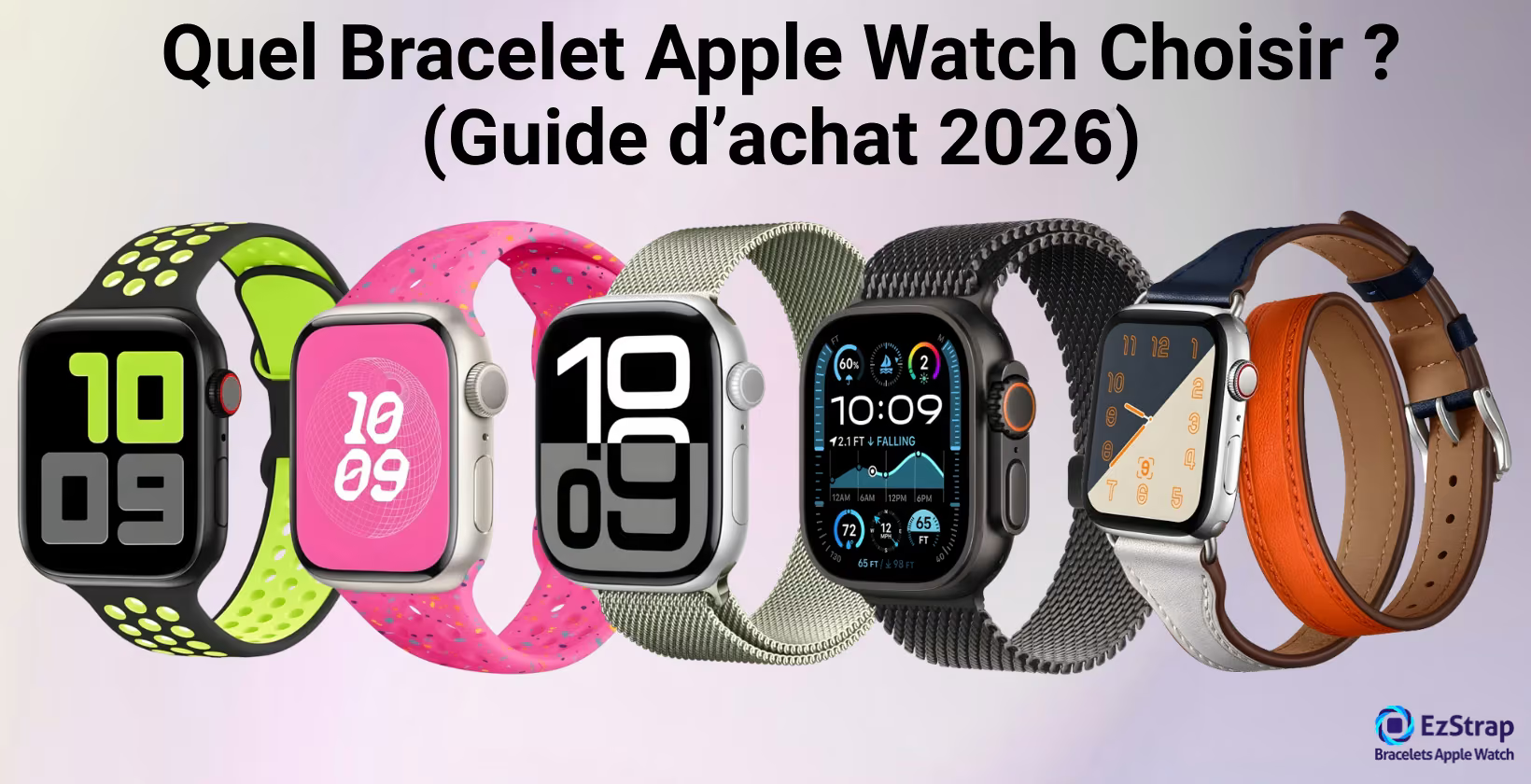
An Apple Watch band is an Apple Watch accessory that keeps the smartwatch fastened around the wearer's wrist. The Apple Watch band is essential to the watch working properly because it ensures good contact between the sensors (optical heart rate sensor, electrical heart sensor (ECG), blood oxygen (SpO2), temperature and wrist detection) and the wrist. It affects water resistance, wear resistance and the style of the Apple Watch. With its varied materials and designs, it personalises the Apple Watch, turning it into a practical and attractive object suited to every occasion.
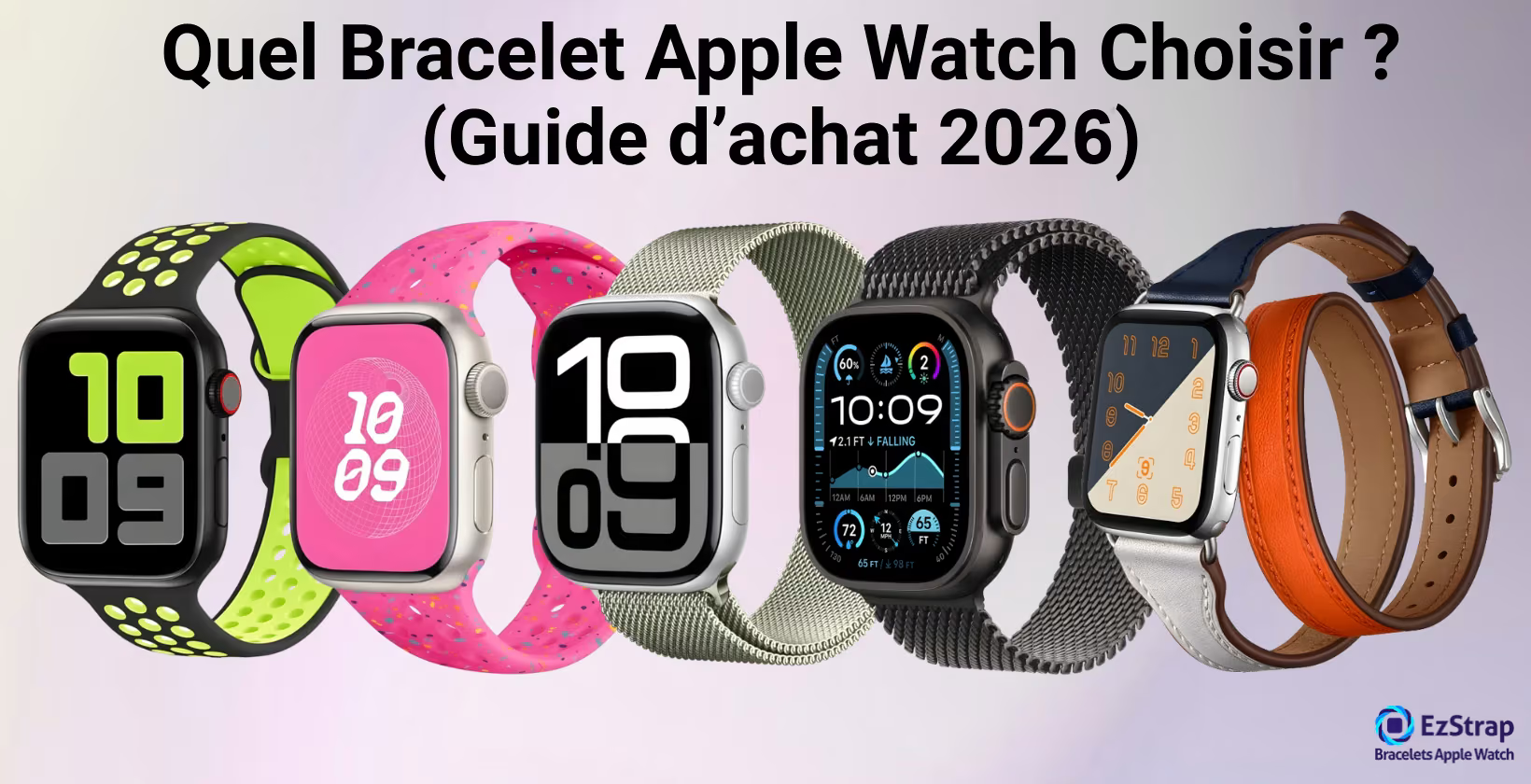
This guide is designed to help you choose the right Apple Watch band according to size, type of activity (sport, office, nights out), type of wearer (women, men, children, older people), its features (types of mesh, materials, clasp), the most reliable brands and how to care for the band.
Find your ideal band in 1 minute
Answer a few questions and get the models that match your watch and how you use it, straight away.
Which band is compatible with my Apple Watch (Ultra, Series or SE)?
All Apple Watch models have an identical, standardised attachment system that determines band compatibility. It depends solely on the case width and the generation of the watch.
Here is the detailed compatibility list:
-
Apple Watch Ultra (49 mm) The 49 mm case is compatible with the bands for the 44 mm and 45 mm sizes of the Apple Watch Series. Sport, titanium or reinforced nylon bands are recommended for better resistance to outdoor activities. Slim or older 42 mm bands do not guarantee an ideal fit.
-
Apple Watch Series (1 to 11) The 38 mm, 40 mm and 41 mm cases share the same lug width. The 42 mm cases of the Series 1 to 3 and the 44 mm, 45 mm and 46 mm cases form another family, compatible with one another. Exception: the 42 mm Series 10 and 11 belongs to the first family. Upside: a vast range of official and third-party bands. Limitation: not interchangeable between the two size families.
-
Apple Watch SE (1st, 2nd and 3rd generation) The SE follows the same standard as the equivalent Series. The 40 mm and 44 mm cases (all three generations) share their respective bands. Strong point: interchangeable with the Series of the same fitting, and in 44 mm with the 49 mm Ultra.
In short, two band widths determine compatibility: small cases (38/40/41 mm, and 42 mm on Series 10 and 11) and large cases (42 mm on Series 1 to 3, 44/45/46/49 mm). A band designed for one size in its family fits all the corresponding generations.
Which Apple Watch band sizes should you choose?
Stretchy Apple Watch bands (e.g. Solo Loop, Braided Solo Loop) come in fixed sizes (S, M, L, XL): they have no adjustable buckle and so must be matched to the wrist circumference. Here are the main points.
- Size S (Small) Recommended for slim wrists. Suits those who prefer a snug, discreet fit.
- Size M (Medium) For an average wrist circumference. This is the default size offered, as a compromise between comfort and everyday hold.
- Size L (Large) For a large wrist circumference. Has the advantage of not squeezing too much at the expense of a good hold during prolonged effort or sporting activities.
- Size XL (Extra Large) For a very large wrist circumference. Doesn't squeeze at all but doesn't stay in place. This type of mesh is not generally offered.
Choosing size S, M, L or XL depends directly on the shape of our wrist. A good fit ensures both comfort and accurate readings from the Apple Watch sensors.
How do you find your Apple Watch case size?
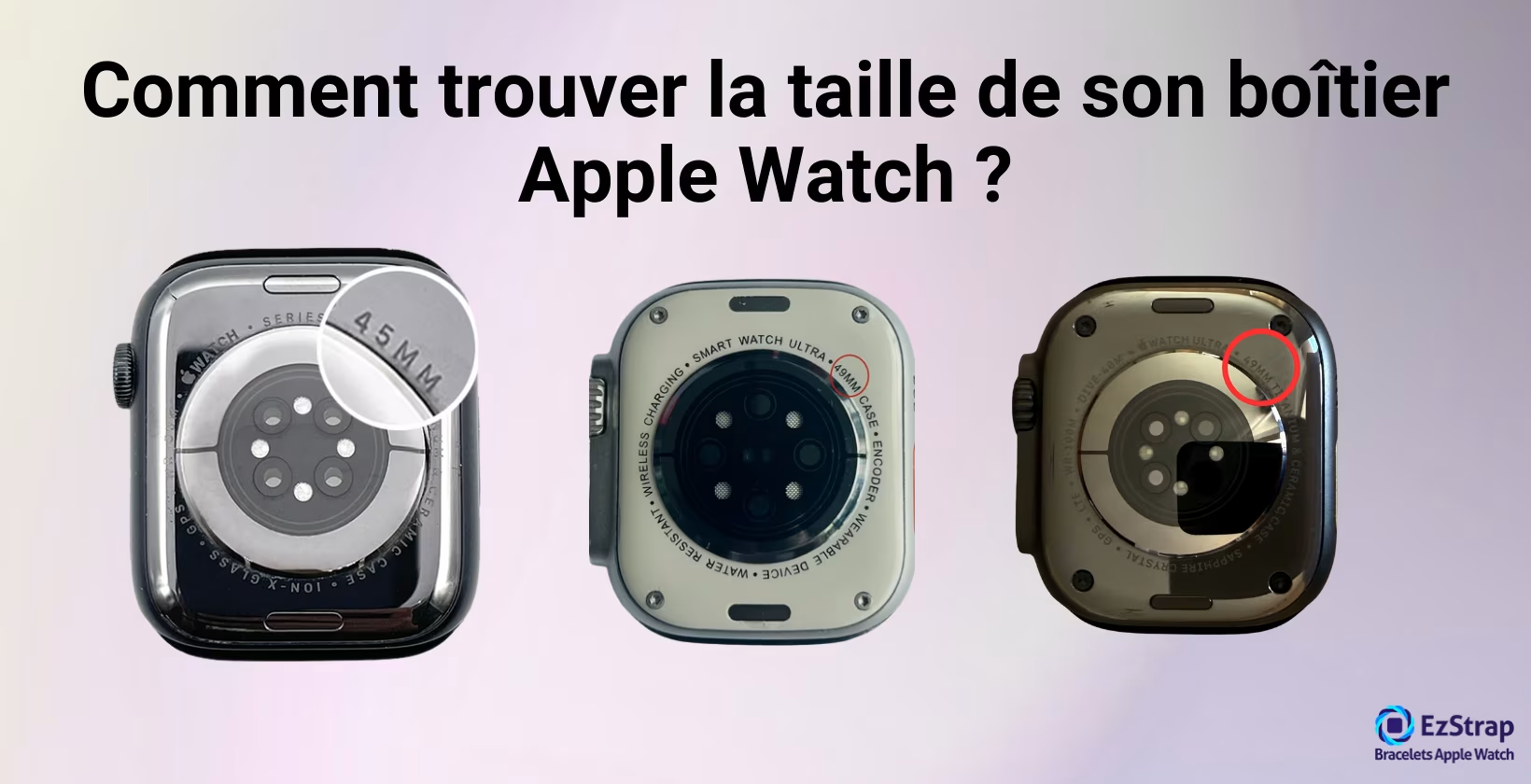
The case size, which determines band compatibility, varies from one Apple Watch model to another. It is essential to know this dimension before choosing a band. Here is how to find your exact size:
- Check the back of the case Turn your watch over and look at the engraved area around the sensors. The size (e.g. 40 mm, 45 mm, 49 mm) is always shown there.
- Open the Watch app information on your iPhone Open the Watch app, go to the My Watch tab, then to the device information. The case size is shown in the specifications.
- Match it to the watch generation Each generation has its reference sizes. For example, the latest Series come in two sizes (42 mm and 46 mm), whereas the Ultra comes only in 49 mm.
In short, the case size can be identified either from the inscription visible on the watch or from the information in the Watch app. This check ensures you choose a band that fits perfectly.
How do you measure your wrist?
Measuring your wrist is necessary to choose an Apple Watch band in the right size. This applies to elastic bands, but also to those that come in several fixed sizes (S, M, L, XL). The process needs little equipment and a simple calculation.
- Gather your equipment Use a flexible tape measure. If you don't have one, take a piece of string or a strip of paper and a ruler.
- Place the tape around your wrist Wrap the tape measure around the spot where the watch is worn, just below the wrist bone. Keep the tape snug without squeezing.
- Read the measurement Note the length obtained in cm or mm. If you are using string, mark the point where it meets, then measure that length with a ruler.
- Apply the fitting formula Wrist circumference + 0.5 cm = optimal band size. Example: 16.5 cm wrist → 16.5 + 0.5 = 17 cm comfort match.
- Compare with the official guides Check the value you found against the Apple size guide or that of the third-party manufacturer to choose S, M, L or XL according to the band range.
In this way, measuring the band size at the wrist relies on a simple value adjusted by a comfort margin. This calculation ensures a precise choice and avoids a band that is too tight or too loose.
Which Apple Watch band should you choose for sport?
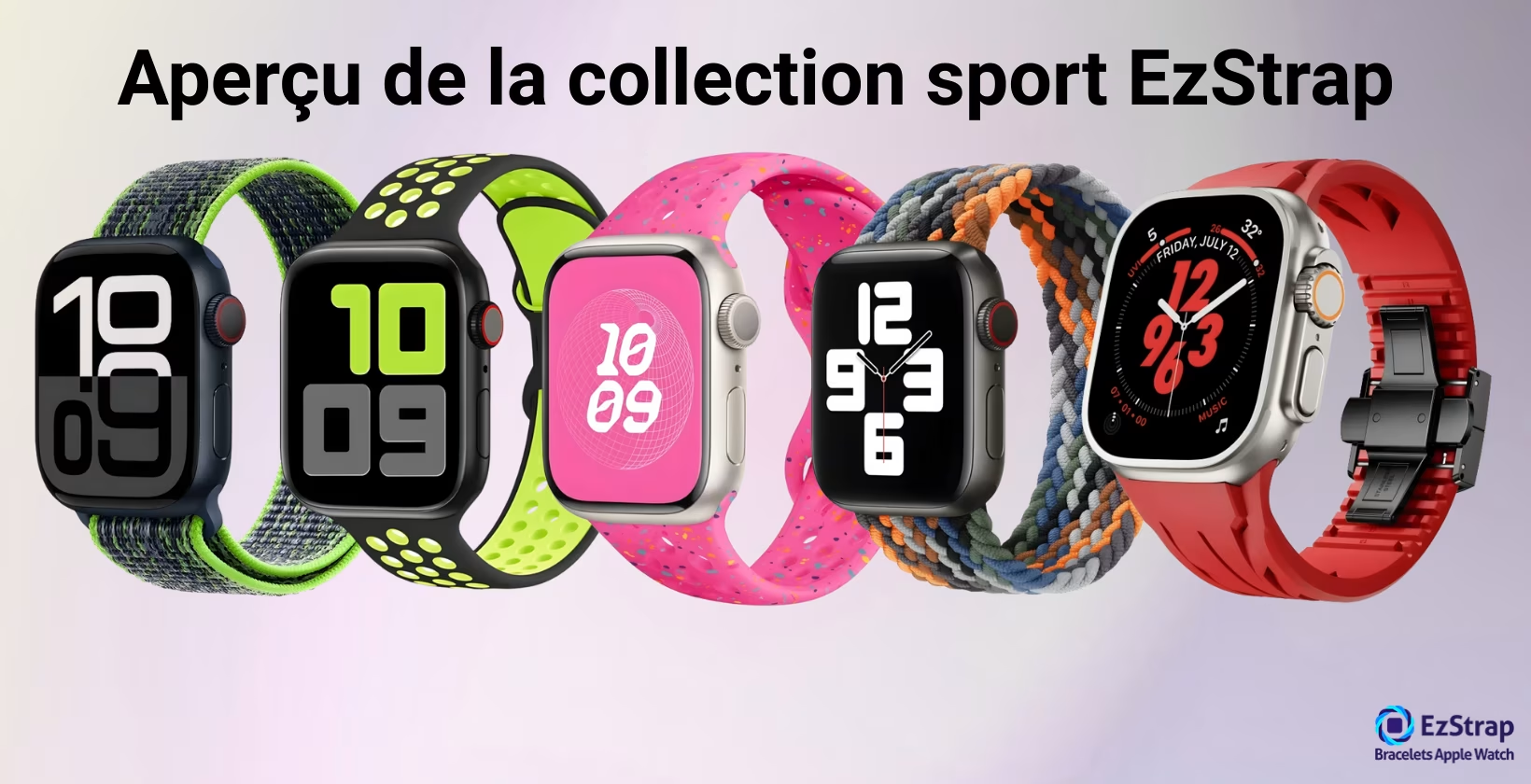
An Apple Watch band for sport must ensure hold, comfort and resistance to sweat or water. The materials available suit specific uses. Here is a summary of the main materials suited to sporting activities.
-
Fluoroelastomer Fluoroelastomer is a type of synthetic rubber used by Apple for its Sport Band. It is resistant to heat, moisture and chemicals. Advantage: smooth surface that is easy to clean, very durable. Disadvantage: limited breathability when sweating heavily.
-
Standard silicone Standard silicone is flexible and affordable. It suits short or low-intensity use. Advantage: lightweight and immediately comfortable. Disadvantage: less durable over time than fluoroelastomer.
-
Woven nylon Nylon is a lightweight, breathable textile fibre. Example: Sport Loop. Advantage: comfortable, with a hook-and-loop fastening that allows precise adjustment. Disadvantage: takes longer to dry after immersion.
-
Reinforced technical fabrics Some sport bands incorporate high-strength fibres combined with solid clasps (titanium or steel). Example: Apple Watch Ultra Alpine Loop. Advantage: very good hold for outdoor sports. Disadvantage: higher cost.
-
Ventilated elastomers Models such as the Nike Sport Band use a perforated fluoroelastomer to improve airflow. Advantage: better ventilation during prolonged effort. Disadvantage: very sporty look that doesn't blend into dressy outfits.
-
Braided loop or elastic fabric These stretchy materials adjust automatically to the wrist. Advantage: comfort and no clasp. Disadvantage: less stable for high-impact sports.
Conclusion: For versatility, fluoroelastomer remains a benchmark, nylon suits running or fitness, reinforced textiles are geared towards extreme sports, and perforated elastomers and elastic fabrics favour breathability and comfort.
Which Apple Watch bands suit diving or water sports?
A band worn in water must withstand salt or chlorinated water, dry quickly and hold the watch securely. Here are the materials and models suited to water sports.
-
Ocean Band (Apple Watch Ultra) Made from high-performance fluoroelastomer, it stays in place even under pressure. Advantage: stretchy and secure with a titanium buckle. Disadvantage: expensive and reserved for recent models.
-
Fluoroelastomer Sport Bands Found across all ranges, they are unaffected by prolonged immersion and do not deteriorate. Advantage: very easy to maintain and durable. Disadvantage: poor airflow out of the water, suction-cup effect on the wrist after swimming.
-
Perforated Silicone Bands Inspired by Nike versions, they have holes for quick drying. Advantage: lightweight and comfortable when swimming. Disadvantage: less suited to deep dives or extreme water sports.
-
Woven Nylon Bands Nylon takes longer to dry but remains pleasant to wear for occasional swimming. Advantage: flexibility and precise fit. Disadvantage: possible accelerated wear in salt water.
Fluoroelastomer is the safest material for diving and water sports; perforated silicone and nylon are better suited to surface use or regular swimming.
What are the luxury Apple Watch bands?
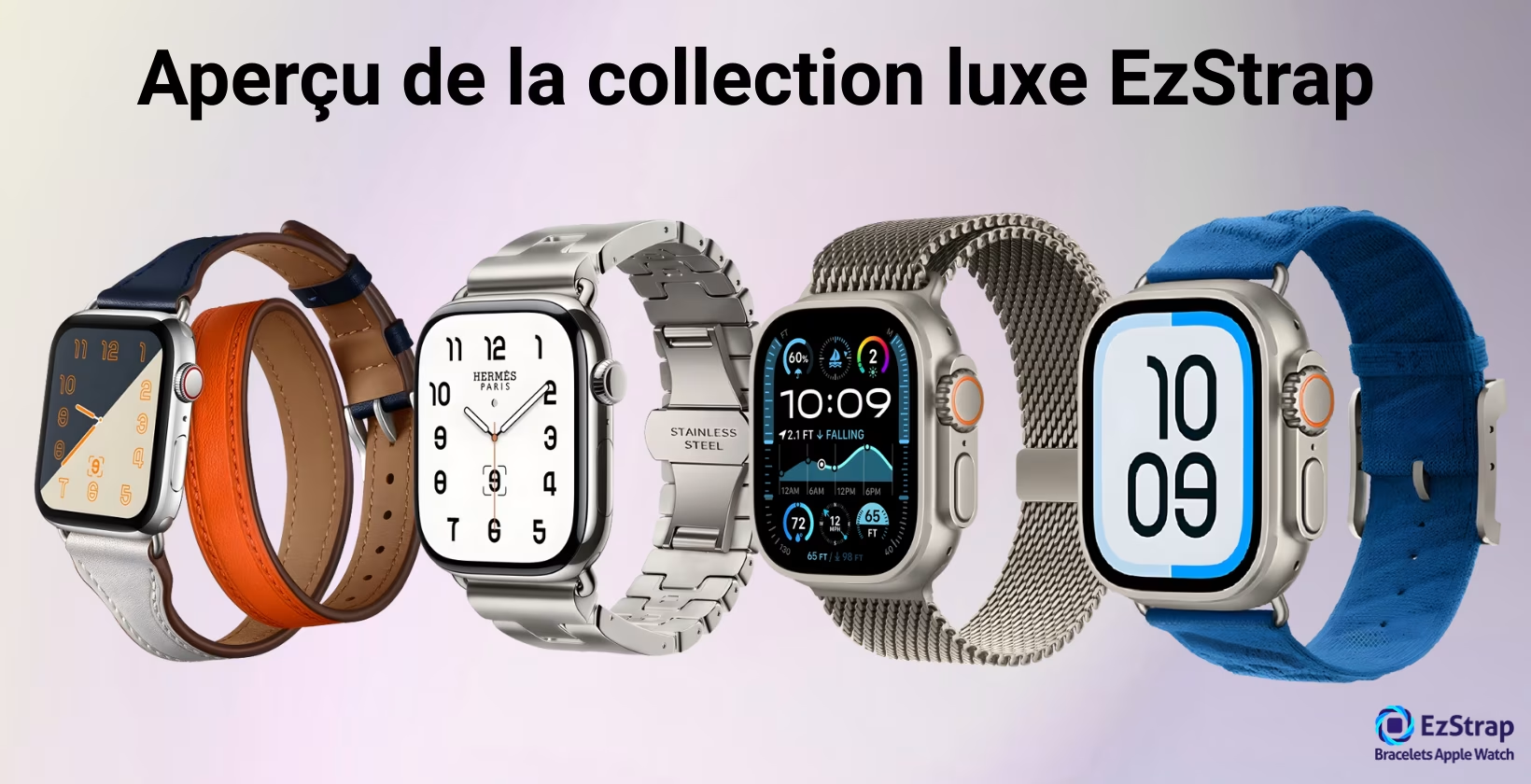
Luxury Apple Watch bands are characterised by the use of fine materials, a carefully crafted design and high-end manufacture. They can turn the Apple Watch into a genuine piece of jewellery or leather goods. Here are the main categories.
-
Hermès bands In calfskin or Barenia leather, they take up the codes of Hermès leather goods. Advantage: prestige of a French fashion house, artisan finishes. Disadvantage: very high price, most often over €300.
-
Stainless steel link bands Made with machined links, they recall the bands of high-end mechanical watches. Advantage: robustness and dressy look. Disadvantage: heavier weight, price around €350.
-
Woven steel Milanese loop bands Inspired by Milanese mesh, they give an elegant look with a magnetic buckle. Advantage: lightness and flexible fit. Disadvantage: prone to snagging, price between €100 and €150.
-
Premium leather bands Using smooth or grained leathers, sometimes with visible stitching, for an elegant and timeless finish. Advantage: classic look suitable for dressy wear. Disadvantage: wears out faster because of water or sweat, price €150 to €250.
Luxury bands favour aesthetics and fine materials over sporting performance. Hermès is the ultimate option, but steel and premium leather are elegant and more affordable alternatives.
Which Apple Watch band should you choose for nights out and evening events?
A band for nights out and evening events must be both attractive and comfortable. It is characterised by fine materials or elegant patterns that go naturally with dressy clothes. Here are the main options available.
-
Leather bands Made from smooth, grained or suede leather, they have a classic, timeless look. Advantage: understated elegance and comfort. Disadvantage: vulnerability to moisture and perspiration. Average price: €150 to €250 for official models.
-
Braided steel Milanese loop bands Evoking watchmaking mesh, they offer a refined look. Strength: easy adjustment with a magnetic clasp and shiny appearance. Disadvantage: tendency to snag on delicate clothing. Price: €100 to €150.
-
Stainless steel link bands Designed to recall classic luxury watches, they have a formal look. Strength: robustness and prestige. Disadvantage: considerable weight and high cost. Price: often around €350.
-
Hermès bands Made from superior-quality leather, they offer the very best in style. Advantage: prestige of an iconic fashion house. Disadvantage: high price, generally over €300.
Conclusion: leather bands go with classic outfits, Milanese loops bring a modern, elegant touch, and steel links favour the watchmaker look. For an exceptional choice, Hermès models are the benchmark.
Which Apple Watch band should you choose for the office / work?
An Apple Watch band for the office must be comfortable to wear for long periods and elegant enough to suit a professional environment. The materials and designs chosen vary with how formal the workplace is.
-
Leather bands: In smooth, grained or suede leather, they give a classic, professional look. Advantages: timeless elegance and comfort. Disadvantages: wears out more with moisture. Price: €150 to €250.
-
Woven Steel Milanese Loop Bands: Made from fine mesh with a magnetic buckle, they offer a modern, clean look. Advantages: easy adjustment and elegant style. Disadvantages: sometimes pull on arm hair. Price: €100 to €150.
-
Stainless Steel Link Bands: Inspired by classic watches, they give a dressy, premium look. Advantages: strength and prestige. Disadvantages: heavier and more expensive. Price: around €350.
-
Understated Woven Nylon Bands: Made from lightweight fibres, they suit less formal settings. Advantages: comfort and breathability. Disadvantages: more casual appearance than leather or steel. Price range: €50 to €100.
Leather remains the most consensual choice at the office, the Milanese loop modernises a formal jacket, and steel links convey a status image. In a more casual setting, understated woven nylon makes a comfortable, discreet compromise.
What are the best artisan Apple Watch bands?
Handmade Apple Watch bands are characterised by: craft manufacture, original materials and personalisation. They target an audience seeking authenticity that wants to stand out from industrialised production. Here are the main families.
-
Hand-stitched leather bands Made by leatherworkers using full-grain or exotic leathers (alligator, ostrich). Advantage: beautiful finishes, natural comfort that develops a patina over time. Disadvantage: high upkeep and price (€100 to €300).
-
Carved wood bands Made from fine woods (ebony, sandalwood, bamboo), they offer an original, natural look. Advantage: unique appearance thanks to the grain of the wood. Disadvantage: sensitive to water and available in few species. Price: €80 to €200.
-
Hand-woven fabric bands Made from cotton, hemp or silk, they use artisan weaving techniques. Advantage: lightweight, with personalised patterns. Disadvantage: less resistant to everyday wear and tear. Price: €50 to €120.
-
Stone or bead bands Assembled by hand with lava, onyx or turquoise beads, for a spiritual or bohemian style. Advantage: unusual, customisable look. Disadvantage: fragile and heavier. Price: €70 to €150.
Conclusion: hand-stitched leathers represent timeless elegance with top-end handmade quality, while wood, woven fabrics and stone are interesting, original artisan options for users seeking something unique.
What are the best bands for Apple Watch Ultra?
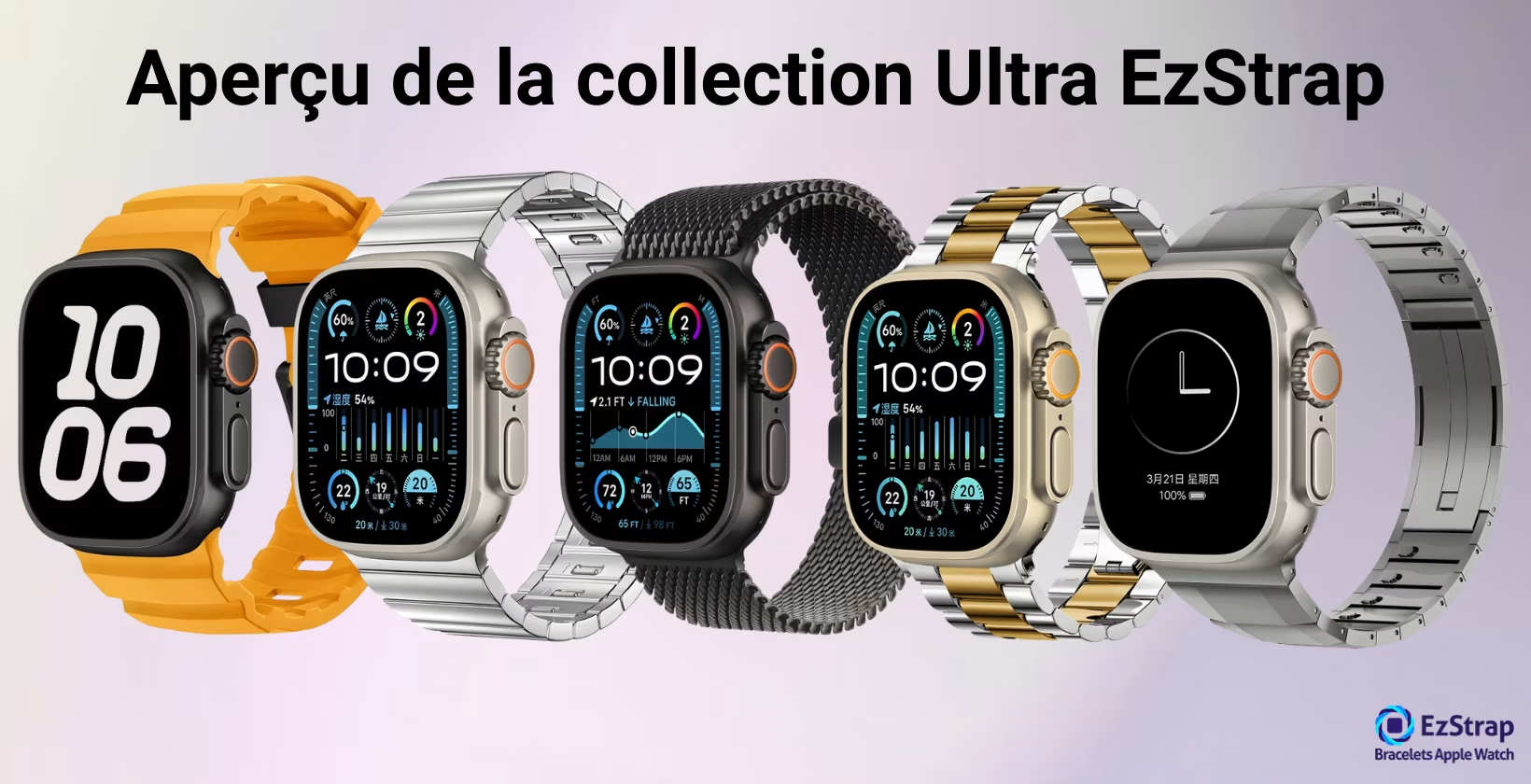
The Apple Watch Ultra is designed for sporting and extreme activities. Its dedicated bands emphasise robustness, safety and adaptation to harsh environments. Here are the most suitable models:
-
Ocean Band Made from high-performance fluoroelastomer, it is designed for diving and water sports. Advantage: stretchiness and hold with a titanium buckle. Disadvantage: very sporty design, less suited to everyday wear. Average price: €99.
-
Alpine Loop Band Made from high-strength textile with a titanium clasp, it is aimed at mountaineering and hiking. Advantage: stability on the wrist even with gloves. Disadvantage: high price compared with classic models. Price: €99.
-
Trail Loop Band Made from lightweight, breathable textile, it suits running and intense training. Advantage: comfort and ventilation. Disadvantage: less robust than the Ocean or Alpine for extreme environments. Price: €99.
-
Third-party brand bands Some specialist brands offer bands in ballistic nylon, reinforced silicone or stainless steel developed to fit the 49 mm case. Advantage: wide variety of styles and budgets. Disadvantage: uneven quality depending on the manufacturer. Price: between €50 and €150.
Conclusion: the official range of three models – Ocean, Alpine and Trail – covers the main sporting uses of the Apple Watch Ultra, while third-party manufacturers widen the choice for those who want a different style or price.
What are the best bands for Apple Watch Series (1 to 11)?
Apple Watch Series (1 to 10) smartwatches are compatible with a wide variety of bands. Materials: polyamide (plastic fibre) and Velcro. The most suitable models offer comfort, great adaptability and a style that suits everyday wear. Here are the best options worth considering:
-
Sport Band (fluoroelastomer) Made from resistant synthetic rubber, it suits both sporting and everyday use. Advantage: strength and easy maintenance. Disadvantage: poor airflow. Price: €49 to €59.
-
Sport Loop Band in woven nylon Made from lightweight textile fibres, it is comfortable and adjusts precisely with the hook-and-loop fastening. Advantage: airy, with a wide choice of colours. Disadvantage: dries more slowly after immersion. Price: between €49 and €59.
-
Braided Solo Loop Band Made of stretchy woven yarn, it slips on without a clasp. Advantage: comfortable and easy to put on. Disadvantage: fixed size, so you need to measure your wrist carefully. Price: €99.
-
Steel Milanese Loop Band Inspired by Italian mesh, it suits professional or dressy settings. Advantage: refined design, magnetic fit. Disadvantage: prone to scratches. Price: €99 – €149.
-
Stainless Steel Link Band Made of assembled machined links, it evokes traditional luxury watches. Advantage: prestige, strength. Disadvantage: heavy and expensive. Price: around €349.
-
Leather Band Available in classic or modern versions, it has a timeless quality. Advantage: attractive and pleasant to wear. Weakness: sensitive to moisture. Price: €149 to €249.
Sport Bands and Sport Loops remain the most functional for everyday wear, whereas leather, Milanese and link bands lend more of a professional or dressy side to the Apple Watch Series.
What are the best bands for Apple Watch SE?
The Apple Watch SE combines an affordable price with the essential features of the premium models. Its bands must reflect this duality and suit sport and everyday wear equally well.
-
Fluoroelastomer Sport Band Made of tough fluoroelastomer, it is the right choice for intensive use. Advantage: resists perspiration and is simple to clean. Disadvantage: not airy enough for long efforts. Price: €49 to €59.
-
Sport Loop – woven nylon band Lightweight, breathable nylon with hook-and-loop fastening for a precise fit. Advantage: comfortable and comes in a vast choice of colours. Disadvantage: takes longer to dry after a swimming session. Price: €49 to €59
-
Braided Loop – Solo Loop Band Elastic textile yarn to slip on without a fastening. Advantage: simple and comfortable from the outset. Disadvantage: requires choosing the right wrist size at purchase. Price: €99
-
Braided Steel Milanese Loop Band Inspired by watch bands, it adds a dressy dimension to the Apple Watch SE. Advantage: elegant design with smooth magnetic adjustment. Disadvantage: sensitivity to scratches. Price: €99-€149.
-
Leather Band Available in classic and modern variants, it is aimed at users wanting a dressy look. Advantage: elegance and comfort. Disadvantage: fragile in moisture and quickly develops a patina. Price: €149-€249.
Conclusion: Sport Bands and Sport Loops remain the most practical for everyday wear on the Apple Watch SE, while braided, Milanese and leather models enhance its look when required in a professional or dressy setting.
What bands suit women?
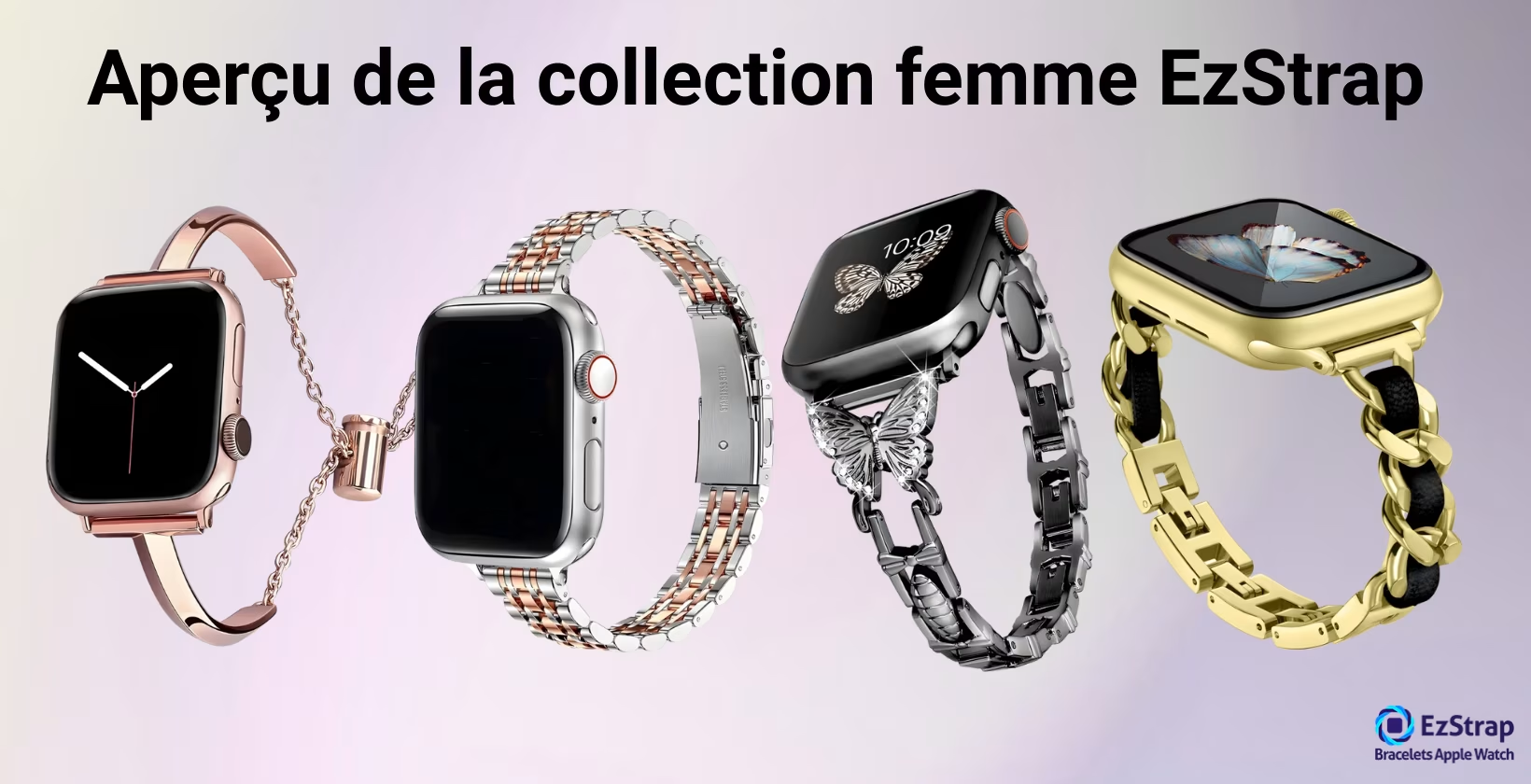
Apple Watch bands for women are characterised by their comfort, slimness and variety of styles. They accommodate wrists that are often slimmer and offer elegant or colourful solutions depending on the occasion. Here are the most suitable models.
-
Slim leather bands Made from smooth, grained or suede leather, they add an elegant, feminine touch. Advantage: polished look and natural comfort. Disadvantage: sensitivity to water and upkeep required. Price: €149 to €249.
-
Woven steel Milanese loop bands Made from fine mesh with a magnetic buckle, they suit slim wrists well. Advantage: smooth adjustment and chic look. Disadvantage: snag on certain delicate clothes. Price: €99 to €149.
-
Braided or elastic Solo Loop bands Made from stretchy textile, they slip on easily and are very comfortable. Advantage: lightness and no buckle. Disadvantage: the size must be chosen carefully. Price: €99.
-
Coloured silicone bands They come in many colours and suit sporty or casual outfits. Advantage: easy to care for and a variety of styles. Disadvantage: less polished result with dressy outfits. Price: €49 to €59.
-
Fashion or jewellery bands Made of small links, beads or gold-tone finishes, they dress the Apple Watch up as a genuine fashion jewel. Advantage: unique, customisable style. Disadvantage: lower durability depending on the brand. Price: €50 to €200.
So, to conclude, slim leathers and Milanese loops are ideal for an elegant style, Solo Loops for comfort, and coloured silicones and fashion bands for varying your style day to day.
What bands suit men?
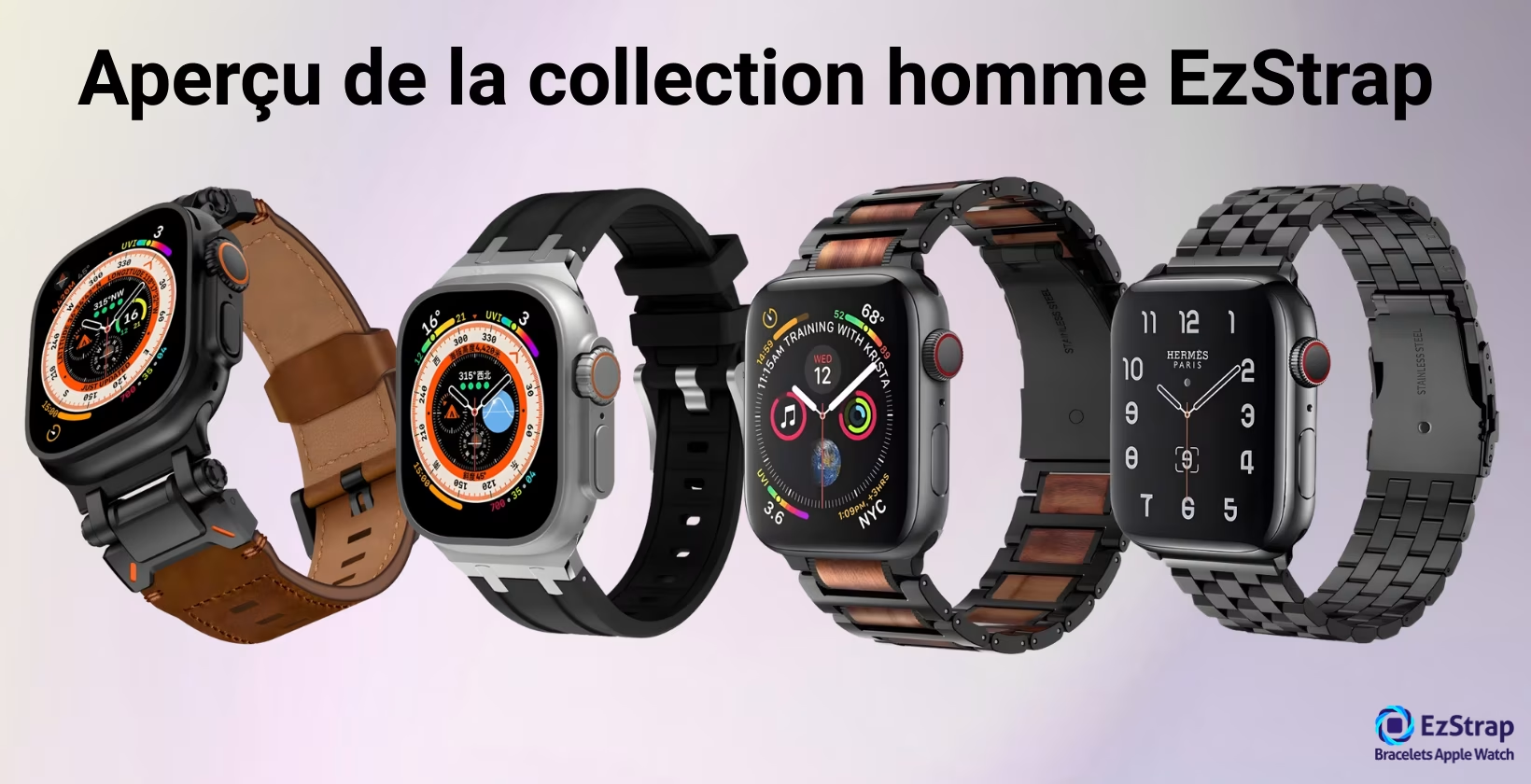
Apple Watch bands for men stand out for their strength, visual width and versatility between work outfits and sporting activities. Those focused on these criteria are:
-
Stainless Steel Link Bands Drawing on classic watchmaking, they accentuate the masculine, dressy side. Advantages: durability and premium look Disadvantages: weight and high price Price: often €349
-
Fluoroelastomer Sport Bands Designed to withstand perspiration and exercise, they suit active users. Advantages: comfort and ease of maintenance Disadvantages: very sporty look that clashes with dressy outfits Price: €49 to €59
-
Thick Leather Bands Made from full-grain or grained leather, they embody a timeless, masculine style. Advantages: elegance and natural comfort Disadvantages: sensitive to water and regular upkeep needed Price: €149 to €249
-
Woven Steel Milanese Loop Bands Made of a fine metal mesh, they give a sober, modern look. Advantages: smooth adjustment with a magnetic clasp Disadvantages: scratches easily over time Price : €99 to €149
-
Reinforced Nylon Bands Designed for outdoor activities, they combine lightness and robustness. Advantages: airy and shock-resistant Disadvantages: dries slowly after immersion Price : €50 to €100
Steel links and thick leather represent a dressy style for the office, while fluoroelastomer and nylon favour sporting performance. Milanese loop bands offer a versatile alternative between modernity and sobriety.
Which Apple Watch band should you choose for a child or teenager?
Apple Watch bands for children and teenagers are lightweight, hard-wearing and suited to slim wrists. They put safety, practicality and colourful styles first. Here are the most suitable models.
-
Silicone bands Made from a soft, resistant material, they suit everyday and sporting use. Advantage: easy to care for and comfortable. Disadvantage: less dressy look. Price: €20 to €50 for third-party models.
-
Woven nylon Sport Loop bands Made of lightweight, breathable nylon, they fasten with a hook-and-loop closure for quick, easy adjustment without an adult's help. Advantage: safety and ease of use. Disadvantage: slower drying after immersion. Price: €30 to €60.
-
Elastic Solo Loop bands Made of stretchy textile, they slip on easily without a fastener. Advantage: comfort and ease of putting on. Disadvantage: you have to find the exact wrist size. Price: €40 to €60.
-
Novelty third-party brand bands Many third-party brands offer novelty designs (superheroes, cartoons). Advantage: playful customisation for the little ones. Disadvantage: unpredictable quality depending on the manufacturer. Price: €15 to €40.
Silicone and nylon bands are the best compromise between safety and comfort for the youngest wearers, while Solo Loops and novelty bands address a concern for practicality and style.
Which Apple Watch band should you choose for an older person?
Apple Watch bands for seniors should prioritise comfort, ease of handling and safety. The aim is to ensure a secure hold while simplifying everyday use. Here are the most suitable models.
-
Elastic Solo Loop bands Made from stretchy textile or silicone, they slip straight on without a fastener. Advantage: very simple, with no mechanical parts to handle. Disadvantage: having to choose exactly the right size. Price: €40 to €60.
-
Magnetic Clasp Bands (Milanese Loop, modern leather) With a magnetic closure, they fasten with a simple gesture. Advantage: easy adjustment and quick to open. Disadvantage: risk of a weaker hold if the magnet is weak. Price: €99 to €149.
-
Velcro / Hook-and-loop Woven Nylon Bands Made from soft nylon with a hook-and-loop closure, they adjust simply. Advantage: lightweight and easy to fasten. Disadvantage: the hook-and-loop system ages faster. Price: €30 to €60.
-
Soft silicone bands Easy to clean and water-resistant, they suit everyday use and light activities. Advantage: practical upkeep. Disadvantage: more sporty than dressy in look. Price: €20 to €50.
Conclusion: Solo Loops and magnetic clasps are the easiest to put on, while hook-and-loop nylon and soft silicones are the most secure and practical for everyday wear.
What are the best types of weave for Apple Watch bands?
The weave of a band refers to the way the components (metal, textile or fibres) are interlaced to form the band. This weaving affects flexibility, comfort, robustness and aesthetics. Throughout history and in use, certain weaves are famous. In the world of Apple Watch, there are various types of weave, each with its own origins and uses. Here are the most iconic weave types for Apple Watch bands.
1. Milanese
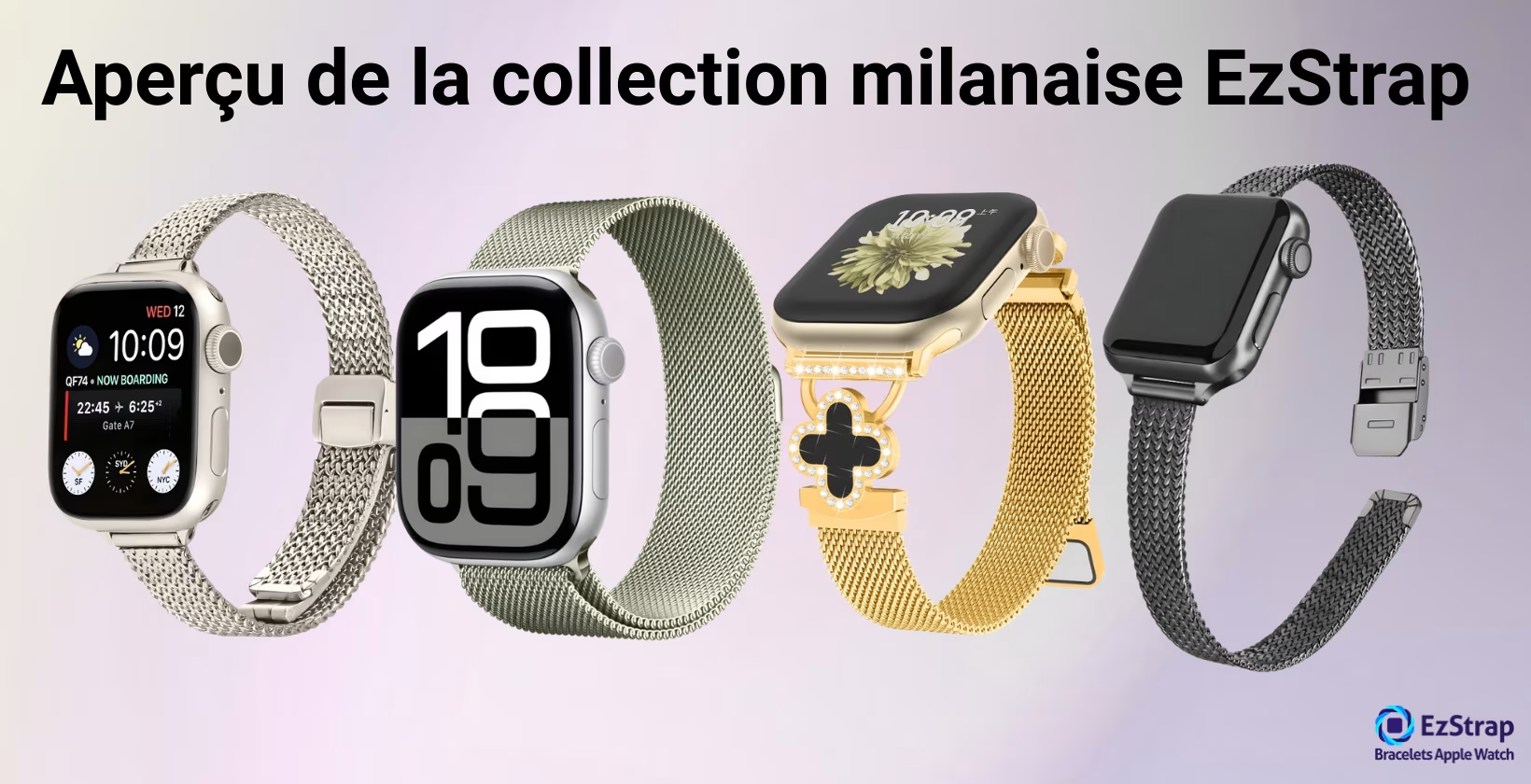
The Milanese weave is a finely interlaced stainless steel metal weave. Originating in 19th-century Milan, it was first used in Milanese bands for mechanical watches. According to Wristwatches: History of a Century's Development (Kahlert, Mühe, Brunner, 2007), this mesh, combining elegance and flexibility with strength, was adopted by many European watchmaking houses.
Apple has brought this tradition back into fashion by including it in its Apple Watch band collections since 2015.
Technical characteristics The Milanese weave is formed of very fine metal wires woven into a dense, flexible structure. On the Apple Watch, it is made of stainless steel with an anti-corrosion treatment and fitted with a magnetic clasp offering a precise, continuous fit.
| Advantages | Drawbacks |
|---|---|
| Comfort: thanks to the flexibility of the weave Easy adjustment: with the magnetic clasp Dressy look: suited to a formal style | Prone to scratches: and to snags on fabric Magnetic clasp: which can weaken over time Higher price: than textile or silicone bands (€99 to €149) |
Inherited from the Milanese band, the Milanese weave is the result of a crossover between Italian watchmaking artistry and modern innovation. Its weave and flexibility offer a compromise between aesthetic refinement and everyday comfort.
2. Link
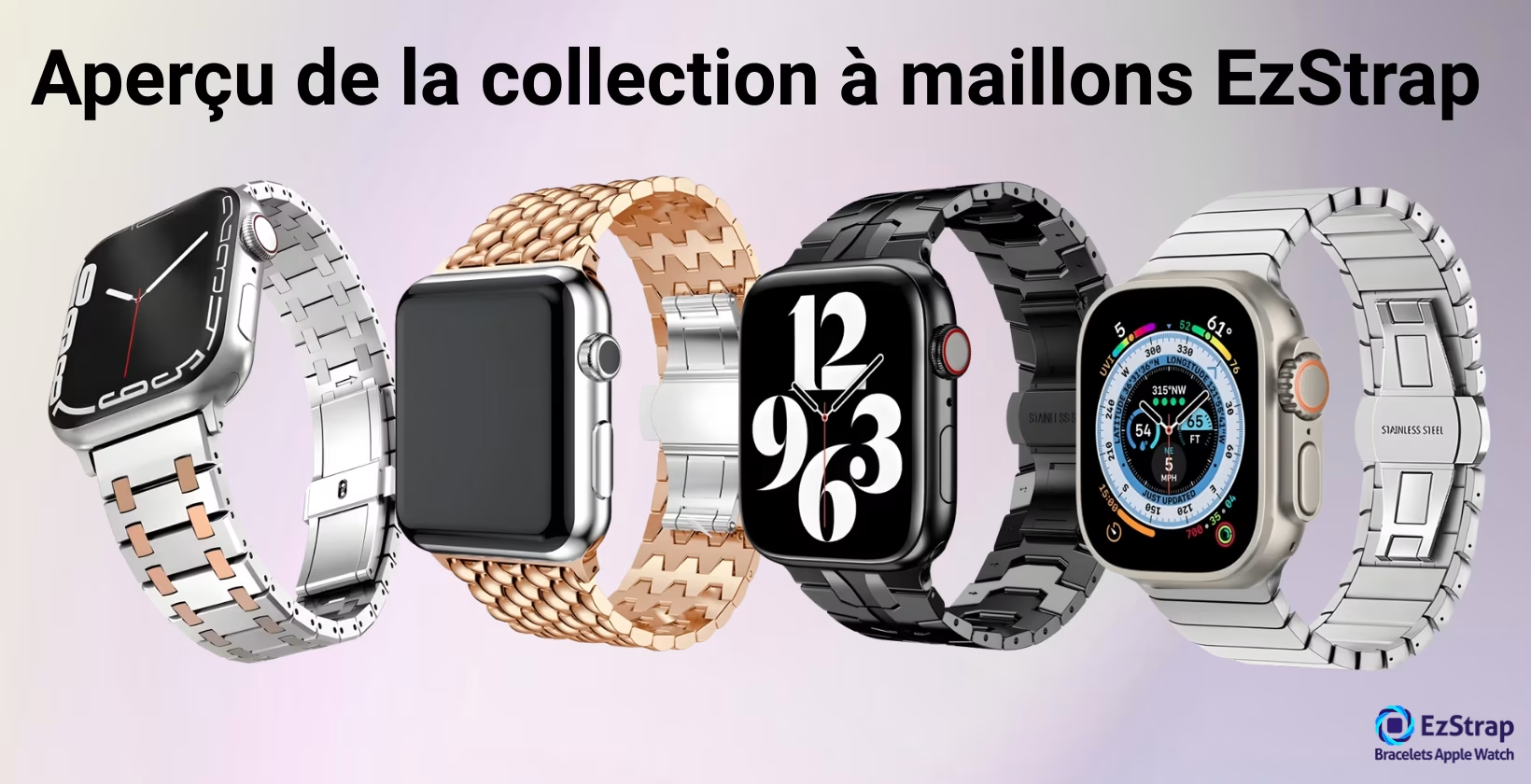
The link construction describes a type of watchmaking build made of machined metal elements that fit together to form a segmented band. It carries on the heritage of the link bands used since the early 20th century in traditional watchmaking. According to The Wristwatch Handbook (Ryan Schmidt, 2016), the link construction remains the favoured solution of luxury manufacturers for combining a lasting design with aesthetics, since each link can be adjusted or replaced individually.
Technical characteristics The link construction is made of independent metal pieces, machined separately and then joined together by pins. This segmented design provides rigidity and a certain amount of flexibility. Apple has added a quick release system for some links, which can be removed without tools.
| Advantages | Drawbacks |
|---|---|
| Solidity: robust construction inspired by traditional watchmaking Adjustability: adjustable links for a precise fit Prestige: elegant, high-end design Professional use: suited to formal and dressy settings | Heavier: than textile or Milanese weaves High price: generally around €349 Less comfortable: than flexible bands for sport |
The link construction, inspired by traditional watchmaking and introduced by Apple, combines solidity, adjustability and prestige, making it a benchmark choice for professional or formal use.
3. Braided
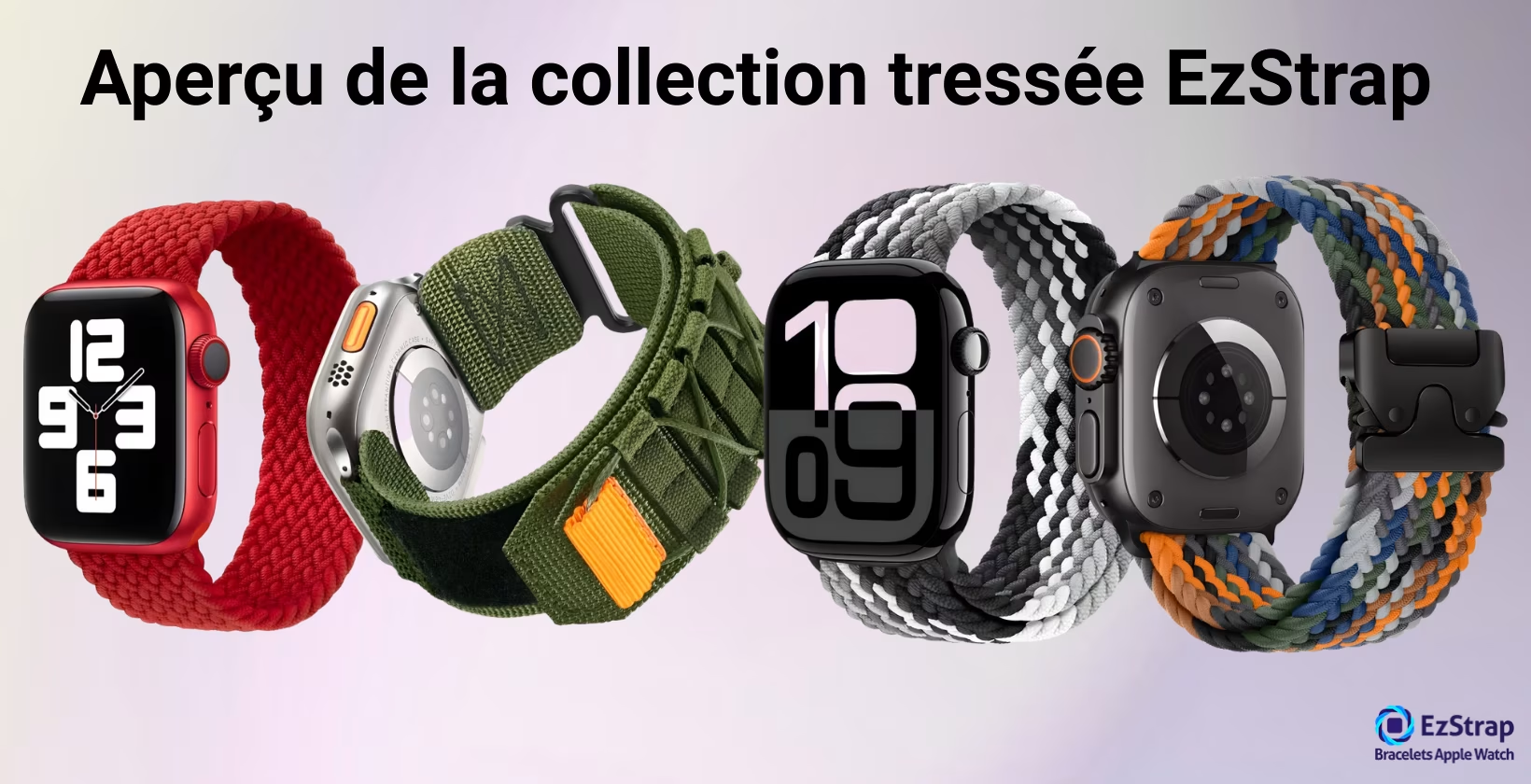
The braided weave is a textile construction in which threads are interlaced to create a continuous, stretchy structure. It is inspired by textile braiding techniques, used since Antiquity in the craft of ropes and fabrics. According to Textile Structures and Their Behaviour (Hearle, Grosberg, 1969), braiding gives a material great flexibility and the ability to adapt to the shape it wraps around.
Apple reinterpreted this technique in its Braided Solo Loop released in 2020, updating the principle through the use of recycled polyester yarns and elastane.
Technical characteristics The braided weave is made of several thousand polyester micro-filaments interlaced with elastic fibres. This construction forms a single loop with no clasp, which stretches to slip straight onto the wrist. The material is breathable, flexible and lightweight.
| Advantages | Drawbacks |
|---|---|
| Great comfort: thanks to its flexibility No buckle: easy to slip on Modern look: wide range of colours | Exact size needed: risk of a poor fit Lower durability: less resistant than steel or fluoroelastomer Price: higher than some textile bands (≈ €99) |
The braided weave was adapted by Apple with modern materials, for comfort, simplicity and visual personalisation.
4. Woven
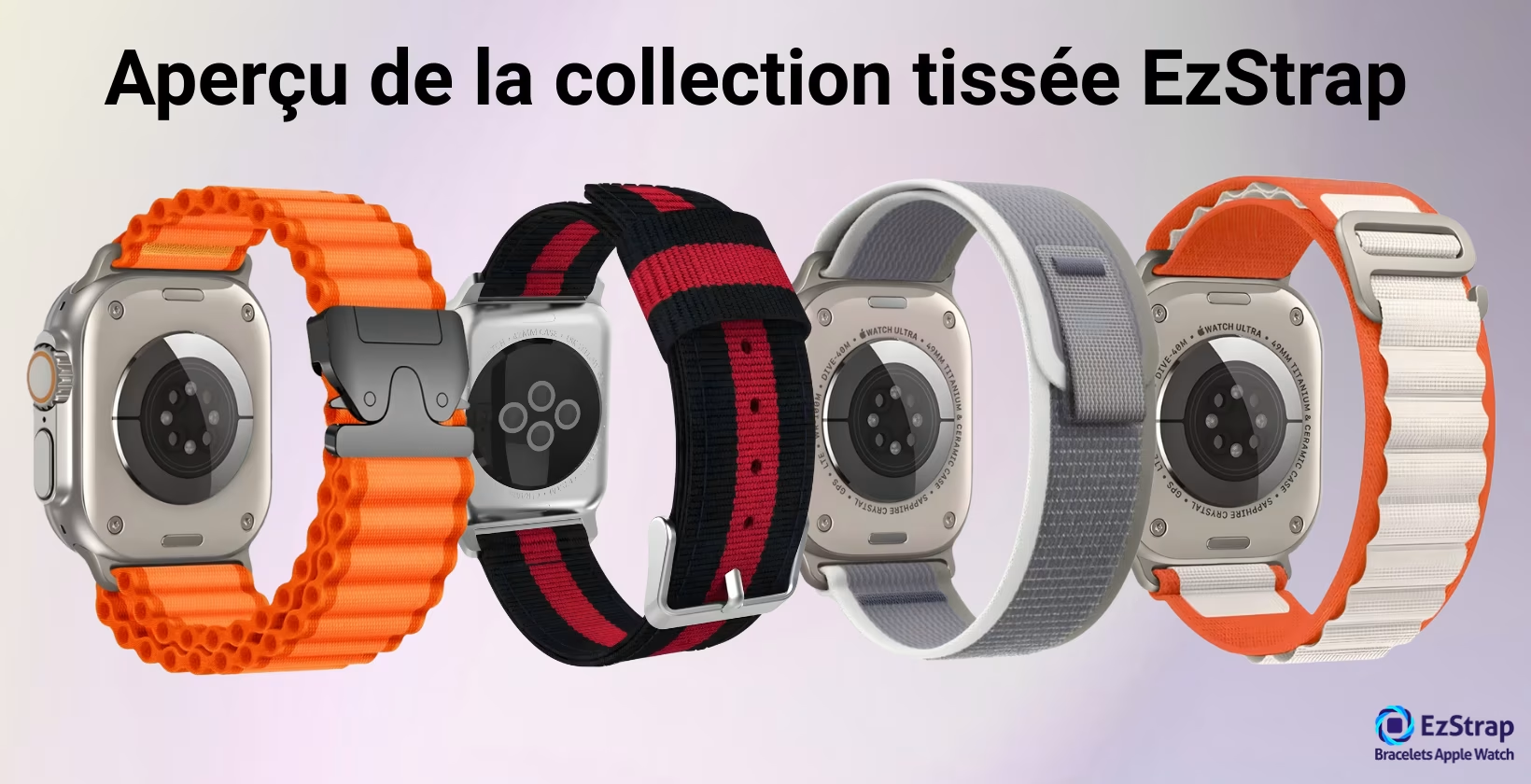
The woven construction is defined as a textile architecture structured by the perpendicular interlacing of weft and warp threads. Inherited from the know-how of the loom, this technique gives the material good mechanical hold and a flat surface. According to Fundamentals of Fabric Structure (Grosicki, 1975), weaving remains the most common method for making robust, breathable textiles.
Apple applies this approach in its woven nylon Sport Loop, opting for a lightweight, adjustable material suited to everyday and sports use.
Technical characteristics The woven construction relies on the regular interlacing of nylon fibres. It comes with a hook-and-loop fastening (Velcro) for a precise, quick fit. The fabric used by Apple often incorporates recycled fibres to reduce environmental impact.
| Advantages | Drawbacks |
|---|---|
| Lightness and airiness: thanks to the openwork structure of the weave Easy fit: precise adjustment thanks to the hook-and-loop fastening Affordable price: wide choice of colours (€49 to €59) | Lower strength: compared with metal or fluoroelastomer Slower drying: after a swim Gradual wear: of the hook-and-loop fastening |
The fruit of a centuries-old heritage of woven textile, the woven construction, modernised by Apple with nylon fibres, stands out for its everyday comfort, its practicality and its attractive value for money.
What are the materials of Apple Watch bands and what are their advantages?
The material of an Apple Watch band plays a crucial role in its comfort, durability and aesthetics. Each material has particular characteristics that affect everyday use, from sport to professional life. Here are the main types of Apple Watch band materials.
1. Leather
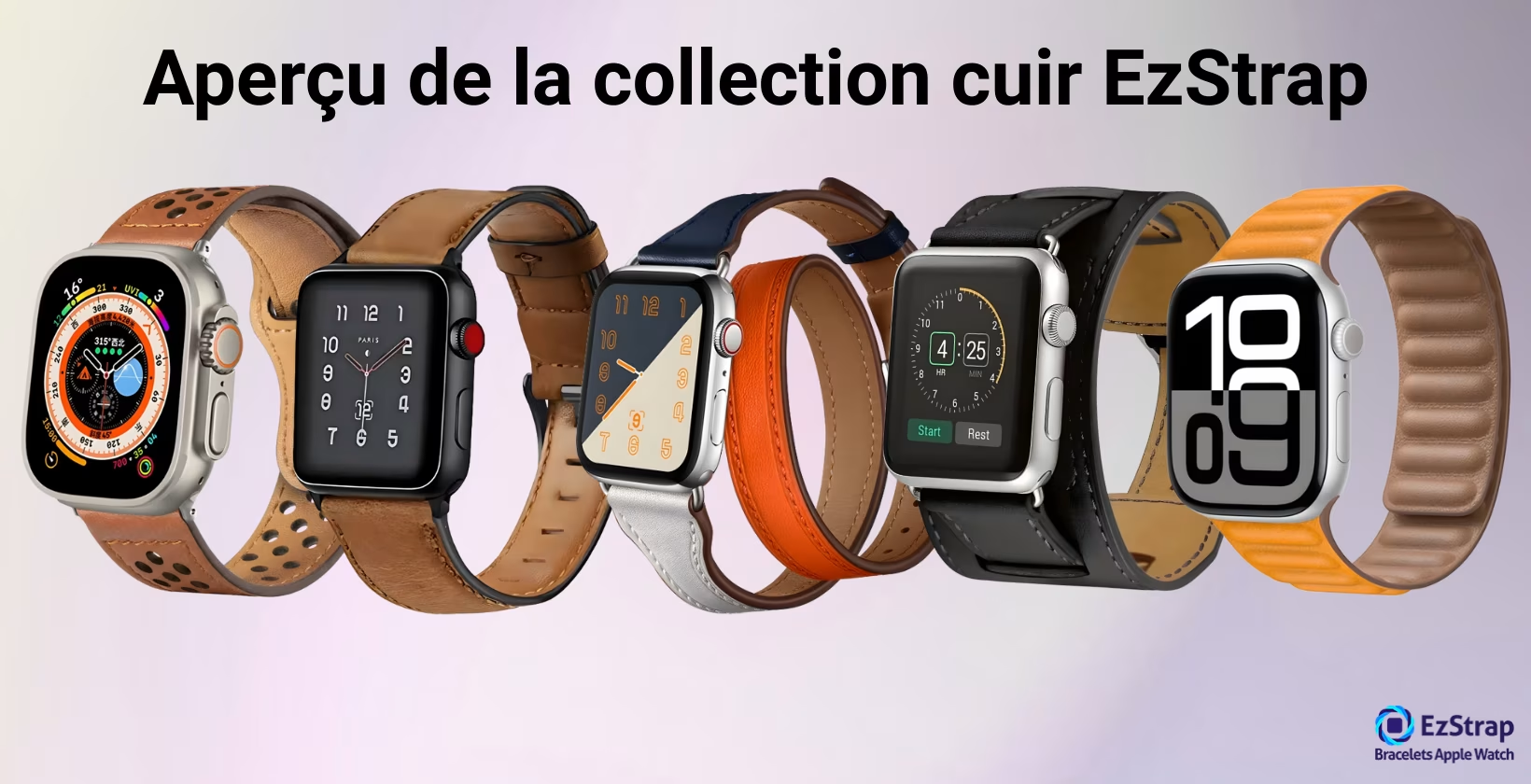
A material obtained by treating (tanning) animal hides, mainly from cattle. Leather has been used for at least 7,000 years, as shown by fragments found at Neolithic archaeological sites in Europe and Asia. Leather is a supple, hard-wearing material used since antiquity in leather goods and in modern watchmaking.
According to Leather : Preparation and Tanning by Traditional Methods (J. Sharphouse, 1983), leather is prized for its mechanical strength and its ability to develop a patina over time.
Technical appearance: The look of leather can be smooth, grained, suede or embossed. Its finish varies depending on the type of tanning (vegetable, mineral or combination) and the finish applied. Apple offers full-grain leather bands, or bands developed in collaboration with Hermès, with integrated hand-finished stitching.
| Advantages | Limits |
|---|---|
| Elegance: refined, timeless look Comfort: pleasant on the wrist, especially once softened Versatile style: suited to formal occasions and everyday wear alike | Sensitivity: to moisture, perspiration and scratches Regular care: required, with suitable products Price: higher than synthetic materials (€149 to €349 for official versions) |
In conclusion, leather, a material thousands of years old, combines comfort and elegance. It remains a favourite choice for making the Apple Watch a chic accessory, provided it is looked after carefully.
2. Metal
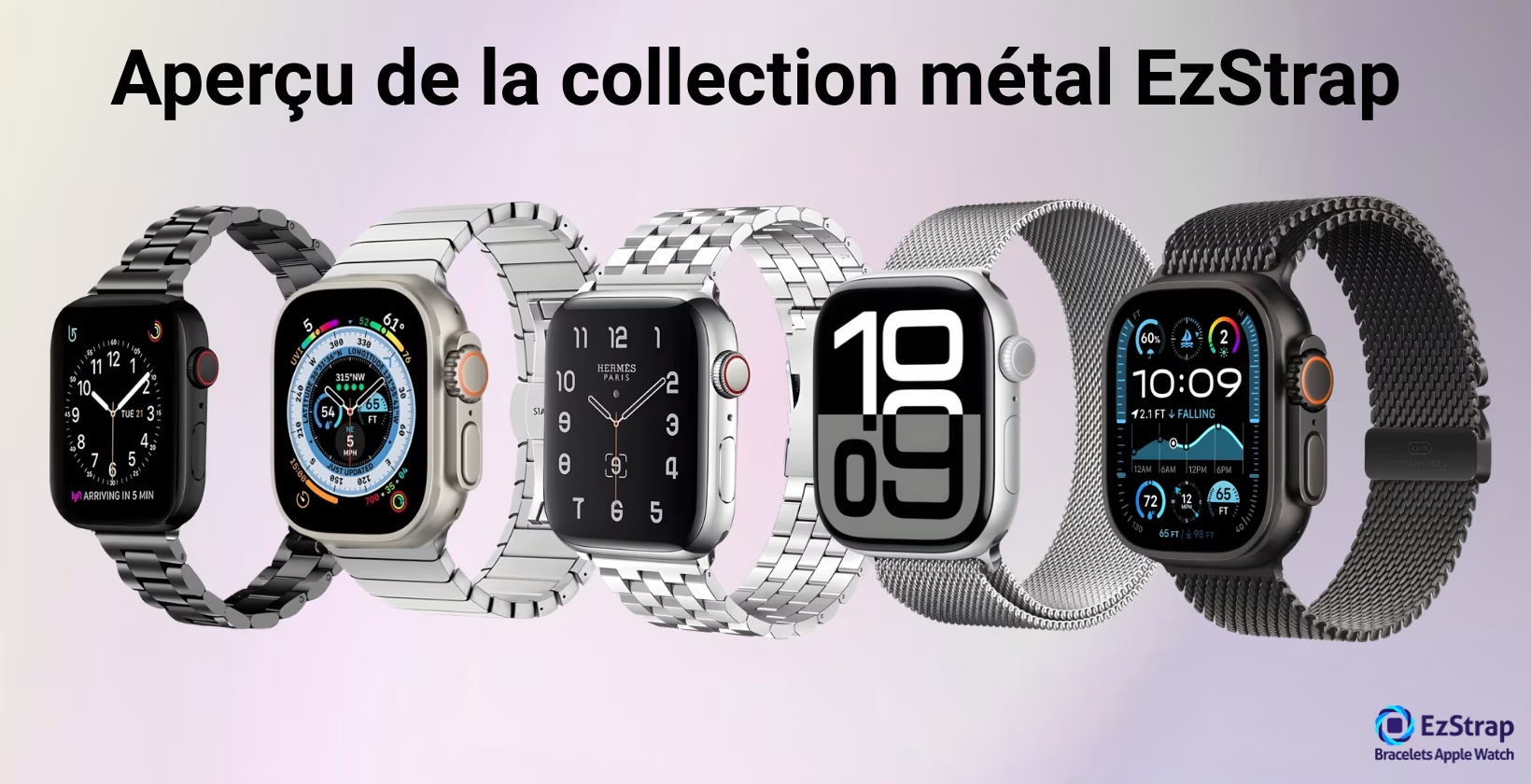
A material obtained by processing an ore through smelting and refining, metal has been used since the Bronze Age (≈ 3000 BC) and is today an essential raw material in watchmaking. According to ASM International (American Society for Metals), stainless steel, an alloy of iron, carbon and chromium, is the metal most commonly used for watch bands because of its corrosion resistance and durability (ASM Handbook, Vol. 1: Properties and Selection: Irons, Steels, and High-Performance Alloys, 2017).
Technical characteristics: Metal Apple Watch bands are mostly made of 316L stainless steel, valued for its robustness and polished finish. Apple also uses titanium, which is lighter and more durable, on some high-end ranges such as the Apple Watch Ultra. The weave types commonly found are the Milanese weave and the link construction, both inspired by traditional watchmaking.
| Advantages | Drawbacks |
|---|---|
| Longevity: excellent wear resistance Premium look: suited to professional environments Variety of styles: finishes available (polished, brushed, textured…) | Higher weight: than textile or polymer bands Price: higher, especially in titanium (€349 to €499 on some official models) Less comfortable: for intense sport |
Metal (stainless steel or titanium) is a more traditional choice that focuses on robustness, durability and a high-end look, at the expense of weight and price.
3. Nylon
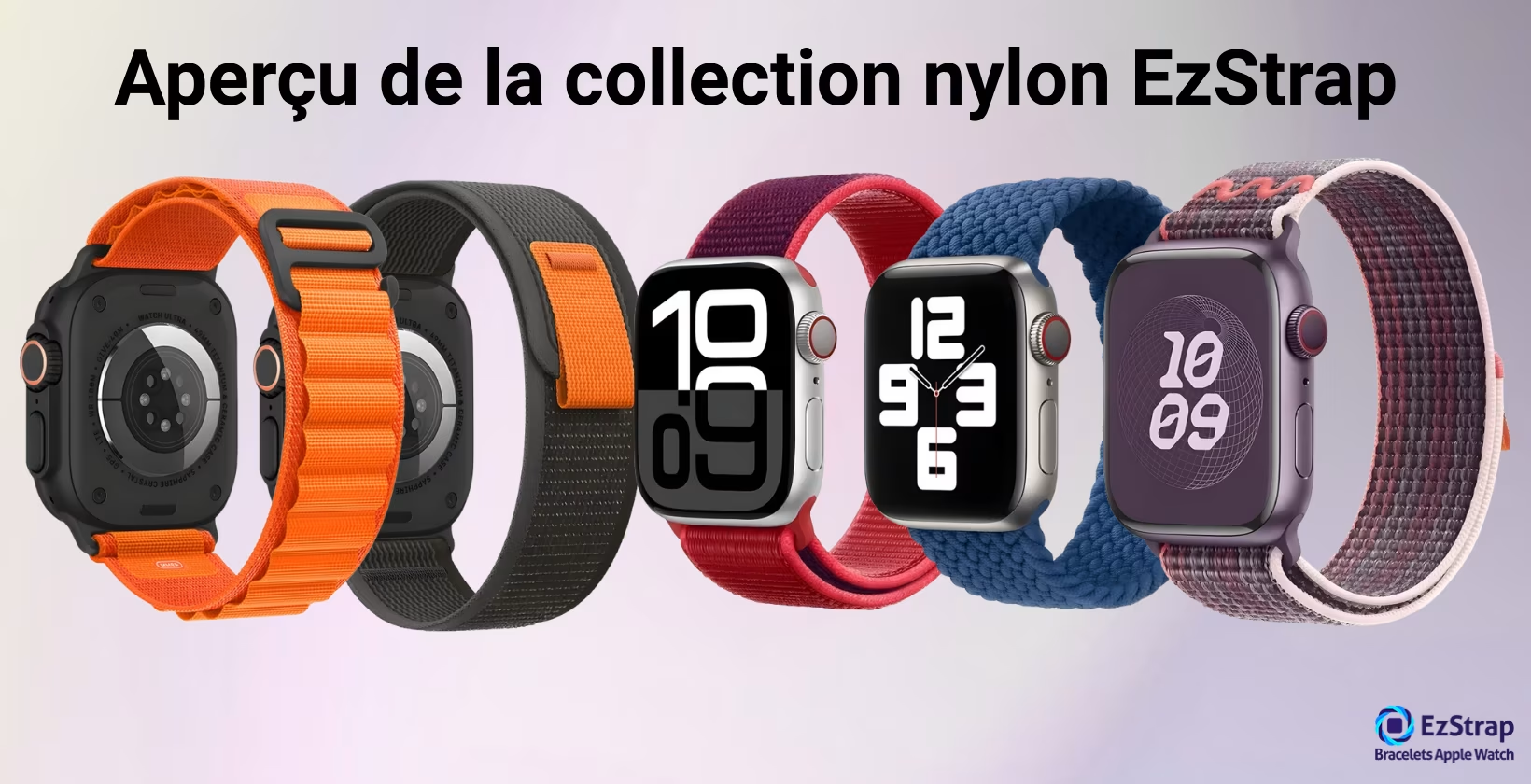
Nylon, a synthetic fibre, was invented by Wallace Carothers at the DuPont laboratories in 1935 and has been sold commercially since 1938. It is a polyamide characterised by its mechanical strength, lightness and flexibility (Polyamide Fibres – Encyclopedia of Materials: Science and Technology, Elsevier, 2001). Nylon has high tenacity and the ability to keep its properties even after repeated use, which makes it a material widely used in the textile industry and in technical accessories.
Technical characteristics: Nylon Apple Watch bands are generally woven or braided. They combine several synthetic filaments to obtain a breathable, supple and lightweight material. Apple has used this material in its Sport Loop bands, which use a hook-and-loop fastening, and in thicker versions for the Apple Watch Ultra.
| Advantages | Drawbacks |
|---|---|
| Lightweight: comfortable on the wrist Breathable: promotes airflow Flexible: good adaptability Hard-wearing: holds up well to wear | Limited strength: compared with metal or leather Slow drying: after a swim Fastening wear: of the hook-and-loop fastening, gradual over time |
A solid alternative, nylon, a modern synthetic textile material, is a good compromise between comfort, adaptability and aesthetic variety. It suits those looking for a light, practical Apple Watch band, especially for sport or everyday wear.
4. Silicone
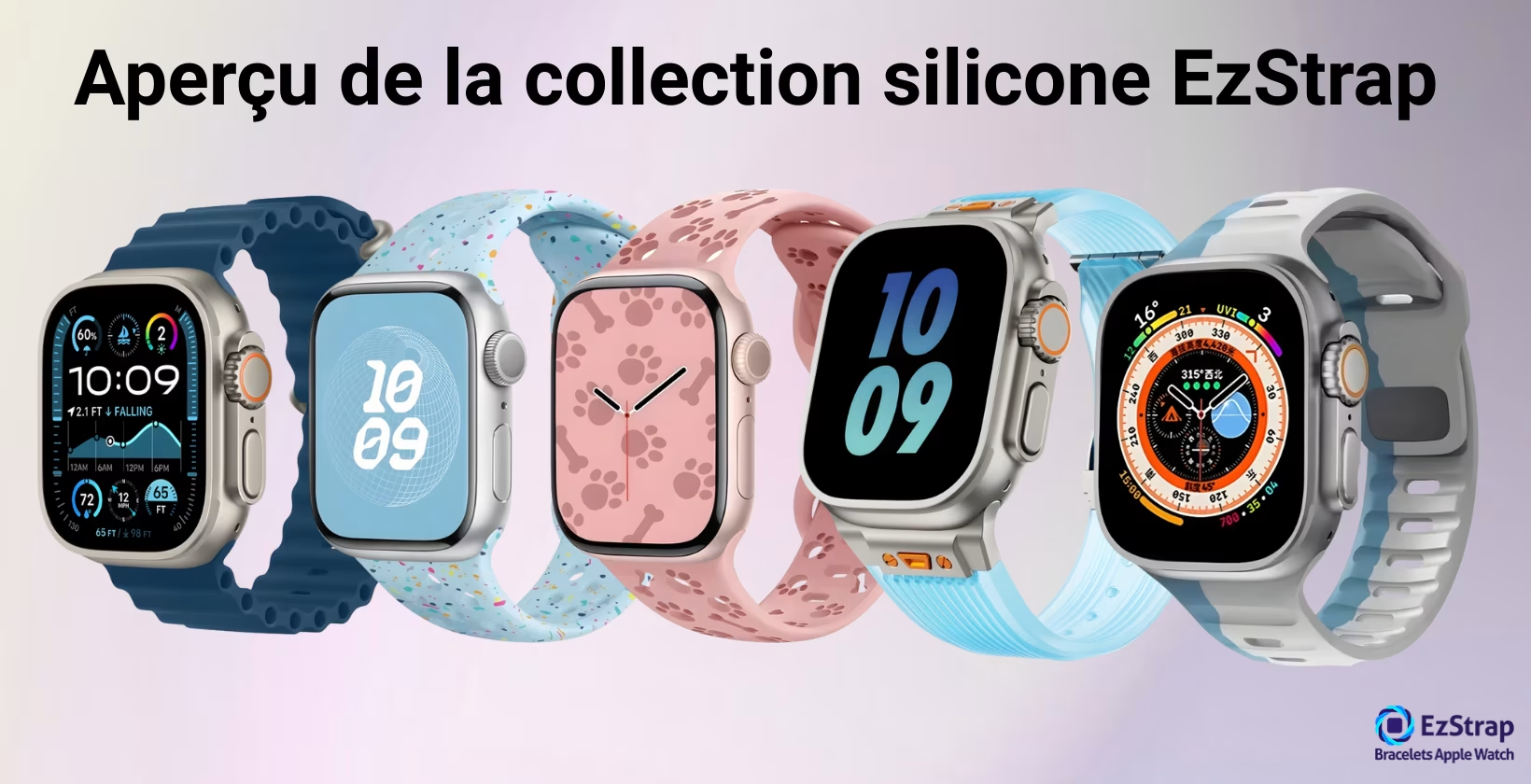
Discovered in the 1940s and developed industrially by Corning Glass Works and General Electric, silicone is now used in the medical and electronics fields and in wearable accessories. A synthetic polymer material based on a chain structure of silicon and oxygen, silicone also contains carbon and hydrogen. According to Silicone Elastomers (Encyclopedia of Polymer Science and Technology, Wiley, 2016), silicone has properties of flexibility, heat resistance and chemical stability that make it a preferred material for objects in prolonged contact with the skin.
Technical characteristics Silicone Apple Watch bands are made of soft moulded polymer. For its Sport bands, Apple uses a high-performance variant of silicone called fluoroelastomer, which provides better durability. Silicone can be solid or perforated (e.g. Nike bands) to improve breathability.
| Advantages | Drawbacks |
|---|---|
| Comfort: flexibility of the material Resistant: to water, sweat and chemicals Easy care: with a wide range of colours | Limited ventilation: on solid versions Less prestigious: seen as inferior to leather or metal Gradual wear: possible after several years of intensive use |
Silicone, and more precisely the fluoroelastomer used by Apple, is the most versatile option for sports and everyday use, combining comfort and durability while remaining affordable.
5. Plastic
Plastic is a vast family of polymer materials, obtained by polymerisation of organic monomers derived from petroleum or biomass, discovered in the early 20th century and now one of the most widely used materials in modern industry. (Plastics: Microstructure and Engineering Applications, Schwarz, 2017): Lightness, malleability and low production cost are the characteristics that make it a ubiquitous material in consumer goods, including wearable accessories such as watch bands.
Technical characteristics Plastic Apple Watch bands are usually made of moulded thermoplastic polymers (polyurethane, polycarbonate or ABS). More or less rigid or semi-flexible depending on the composition. This type of material is used by third-party manufacturers to make novelty or budget models.
| Advantages | Drawbacks |
|---|---|
| Low price: generally under €30 Wide choice: many shapes, patterns and colours | Limited durability: less resistant than high-end materials Sensitive: to scratches and breakage on impact Less noble appearance: compared with leather, metal or silicone |
Conclusion: plastic remains a safe, cheap and customisable option for Apple Watch bands, suited to novelty models or occasional use, and less so for long-term or everyday wear.
6. Wood
Wood is an organic material derived from the trunk and branches of trees, made up mainly of cellulose, hemicellulose and lignin. Used since prehistoric times to make tools and craft objects, it is still prized today for its aesthetic and ecological qualities. According to Wood: Structure and Properties (Bowyer, Shmulsky and Haygreen, 2019), wood has a particular lightness and natural durability, and, thanks to the diversity of species, offers varied characteristics of texture and colour.
Technical characteristics: Wooden Apple Watch bands are typically made from noble species such as ebony, sandalwood or bamboo. Each piece is worked, polished and then protected with a natural varnish or oil. Some models combine the wood with metal elements to improve their robustness and their attachment.
| Advantages | Drawbacks |
|---|---|
| Warmth and natural feel: the pleasant sensation of wood on the wrist Originality: unique, eco-friendly style, different from conventional materials | Sensitivity: to water, moisture and impacts Lower durability: compared with technical materials (metal, silicone) Limited range: prices vary depending on the species (€70 to €200) |
In conclusion, a natural, renewable material, wood brings originality and warmth to Apple Watch bands. It appeals to users looking for a handcrafted, eco-friendly accessory, but needs careful attention to preserve its longevity.
7. Stones / Beads
The stone or bead band is an object made of polished mineral or organic elements strung in a chain. Beads and stones have been known throughout the history of civilisations as ornaments and amulets for at least 100,000 years, as archaeological excavations of Nassarius beads in North Africa have revealed (Bouzouggar and colleagues, Proceedings of the National Academy of Sciences, 2007).
These materials are characterised by great aesthetic and symbolic richness, and now have a place among interchangeable bands for Apple Watch.
Technical characteristics: Stone or bead Apple Watch bands are generally made of semi-precious stones (onyx, jade, turquoise, quartz) or natural beads, mounted on elastic or metal threads to offer a certain flexibility and a fit suited to the watch case.
| Advantages | Drawbacks |
|---|---|
| Original aesthetics: a handcrafted look unique to each creation Symbolic dimension: or spiritual, linked to the stones (e.g. protective turquoise, onyx for stability) Varied style: from the minimalist to the most ornate | Higher weight: compared with textile or silicone materials Increased fragility: risk of breakage on impact Limited comfort: sometimes over long periods of wear |
Used as cultural and spiritual ornaments for thousands of years, stones and beads give the Apple Watch an aesthetic and symbolic dimension. They appeal to users looking for original, expressive accessories, but call for precautions in daily use.
8. Fabric
Fabric is a material made of interlaced warp and weft threads, generally in cotton, linen, hemp or synthetic fibres. Used since prehistoric times for clothing, it remains today one of the most versatile materials in the textile industry. According to Textiles : Concepts and Principles (Phyllis G. Tortora and Ingrid Johnson, 2012), the woven structure provides a combination of strength, flexibility and comfort, which explains its widespread use in fashion and accessories.
Fabric is mainly used in handcrafted, novelty or colourful bands.
Technical characteristics: Fabric Apple Watch bands are made either of natural cotton, blended fibres or recycled materials. Weaving makes it possible to create various patterns, from a simple single colour to complex designs. Some manufacturers combine leather or metal with the fabric to reinforce the attachments.
| Advantages | Drawbacks |
|---|---|
| Light and supple: pleasant to wear Varied aesthetics: wide choice of patterns and colours, customisable Affordable price: more accessible than premium materials (€30 to €80) | Sensitivity: to water and dirt Lower durability: compared with nylon or leather Rapid ageing: with intensive daily use |
A universal textile material, fabric offers lightness and aesthetic variety. It suits users looking for an original, comfortable and affordable band, but needs care and attention to last over time.
What are the clasps on Apple Watch bands, and what are their advantages?
A clasp is the closing mechanism that joins the two ends of a band and holds it in place around the wrist. In the context of Apple Watch bands, it plays a crucial role in security, practicality and comfort.
Each type of clasp suits specific uses and preferences. The choice of clasp directly affects the comfort, security and style of the Apple Watch band.
Here are the main types of clasp used on Apple Watch bands.
1. Tang Buckle
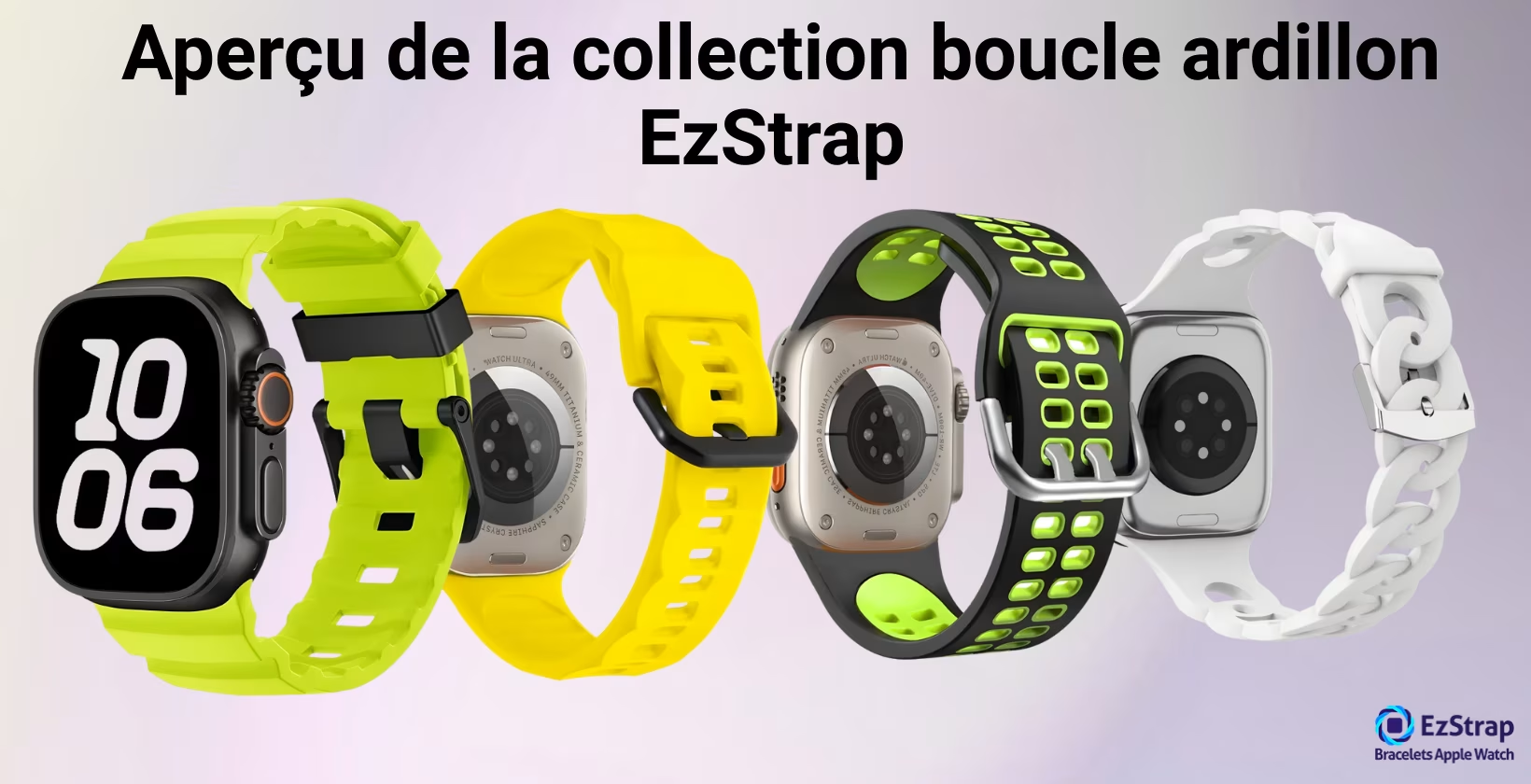
The tang buckle is a classic fastening system that has been used for centuries in leatherwork and watchmaking. It consists of a metal buckle and a pin (the tang) that sits in a punched hole in the band. According to the Wristwatch Handbook (Schmidt, 2016), this type of clasp remains one of the most common on wristwatches because of its simplicity and mechanical reliability.
Apple has even adopted this system on some leather and fabric bands for the Apple Watch.
The tang buckle works with an adjustable hole in which you choose how tight the band sits. Usually made of stainless steel, it can come in gold or blackened versions depending on the style of the band.
| Advantages | Disadvantages |
|---|---|
| Ease of use: robust and proven Precise adjustment: thanks to the multiple perforations Classic style: associated with traditional watches | Slower to put on: compared with magnetic or hook-and-loop clasps Gradual wear: of the punched holes over time Less suited to sport: risk of loosening during intense activity |
The tang buckle is a classic, reliable clasp, inherited from traditional watchmaking, that suits leather bands well and wearers looking for a timeless, secure style.
2. Button / Snap
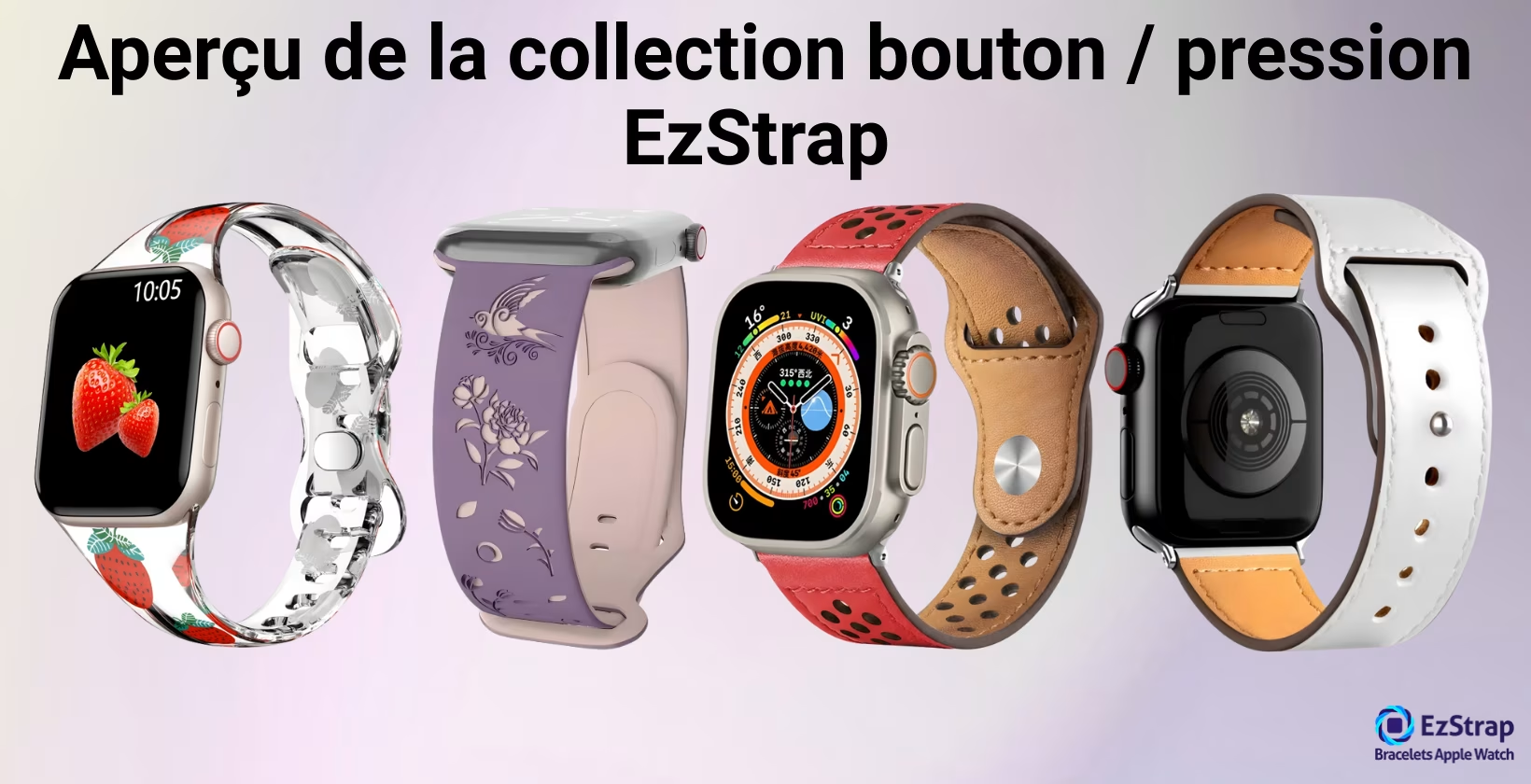
The snap-button clasp, meanwhile, is a closing mechanism based on a button (metal or plastic) clicking into a purpose-made cavity. It is found in leatherwork and in modern watchmaking. It is favoured for its quick "opening". According to the Encyclopedia of Smart Materials (Schwartz, 2002), snap systems belong to the so-called "snap fasteners" and are chosen for their ease of opening and locking.
It is a system commonly used by Apple and some third-party makers on soft or hybrid bands.
Technical description: The principle of the mechanism is to have two parts: a male stud and a female socket. When the user presses, the button "clicks" to lock mechanically and closes. The material is stainless steel, aluminium or a reinforced polymer.
| Advantages | Disadvantages |
|---|---|
| Quick closing/opening in a single movement. Discreet look, integrated into the band. Enough hold for light everyday use. | Low mechanical resistance to wear over time. Risk of the spring weakening after several thousand cycles. Poorly suited to high-stress sporting activities. |
A compromise between practicality and durability, the snap button offers an option that is easy to handle, but less long-lasting than traditional or magnetic solutions.
3. Clip
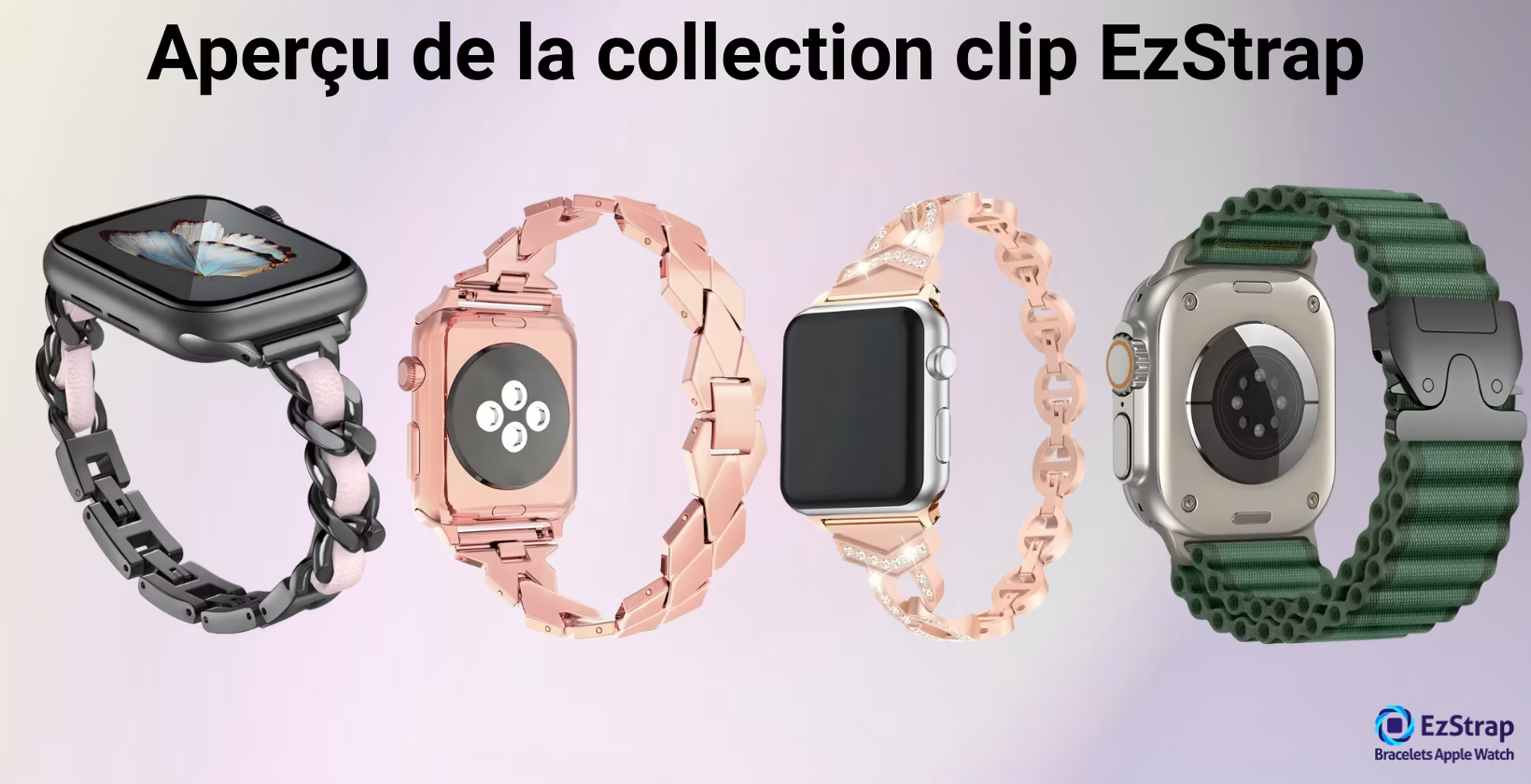
The clip clasp is a closing device based on a mechanical snap-in system between two parts of the band. It works by means of a hinged piece that folds shut and locks under pressure, giving off a characteristic "click". According to The Watch: A Twentieth-Century Style History (Alexander Barter, 2019), this closing method is inherited from traditional watchmaking, and was adopted for its balance between security and ease of use.
Technical characteristics The system consists of a pin or hinge that allows the clasp to fold down and lock into a purpose-made housing. On Apple Watch bands, the clip is generally built into metal or hybrid models to strengthen them.
| Advantages | Disadvantages |
|---|---|
| Secure hold thanks to the clip system. Relatively easy to handle with tactile feedback. Good longevity when made of stainless steel. | Mechanism wear in the long run after thousands of openings. A clip that can weaken if the metal is of poor quality. Less comfortable than a soft clasp for sport. |
The clip clasp is a good compromise between security and practicality. It suits metal or thick Apple Watch bands well, but requires good manufacturing quality so as not to wear out prematurely.
4. Sliding
A sliding clasp is an adjustable device that lets you change the length of the band simply by sliding along a mesh or strap, relying on a friction point or magnetic attraction to hold the desired position. Sliding clasps derive from adjustable closures in jewellery and are found on some fabric or metal bands for continuous adjustment (Bruton, Horology: An Illustrated Primer on the History and Technology of Timekeeping, 2002).
Technical description
The sliding system includes a clasp able to move (sometimes magnetic) along the mesh. Apple uses it on the Milanese Loop with a magnetic system that slides along the metal mesh. Adjustment is made by simple tension, continuously and precisely, with no holes and no links to remove.
| Advantages | Disadvantages |
|---|---|
| Precise adjustment: millimetre-level setting possible to suit the wrist size Adjustable comfort: easy to loosen or tighten during the day Elegant look: discreet and harmonious on the band Versatility: compatible with many styles (sporty or dressy) | Reliance on magnetic force or friction: risk of loosening as it wears. Less secure for intense sporting activities. Price often higher than traditional clasps (€99 to €149 on official Apple models). |
In conclusion, the sliding clasp is an elegant, practical solution, ideal for everyday and professional use. It favours comfort and looks, but remains less suited to environments that demand an extremely solid fixing.
5. Deployant
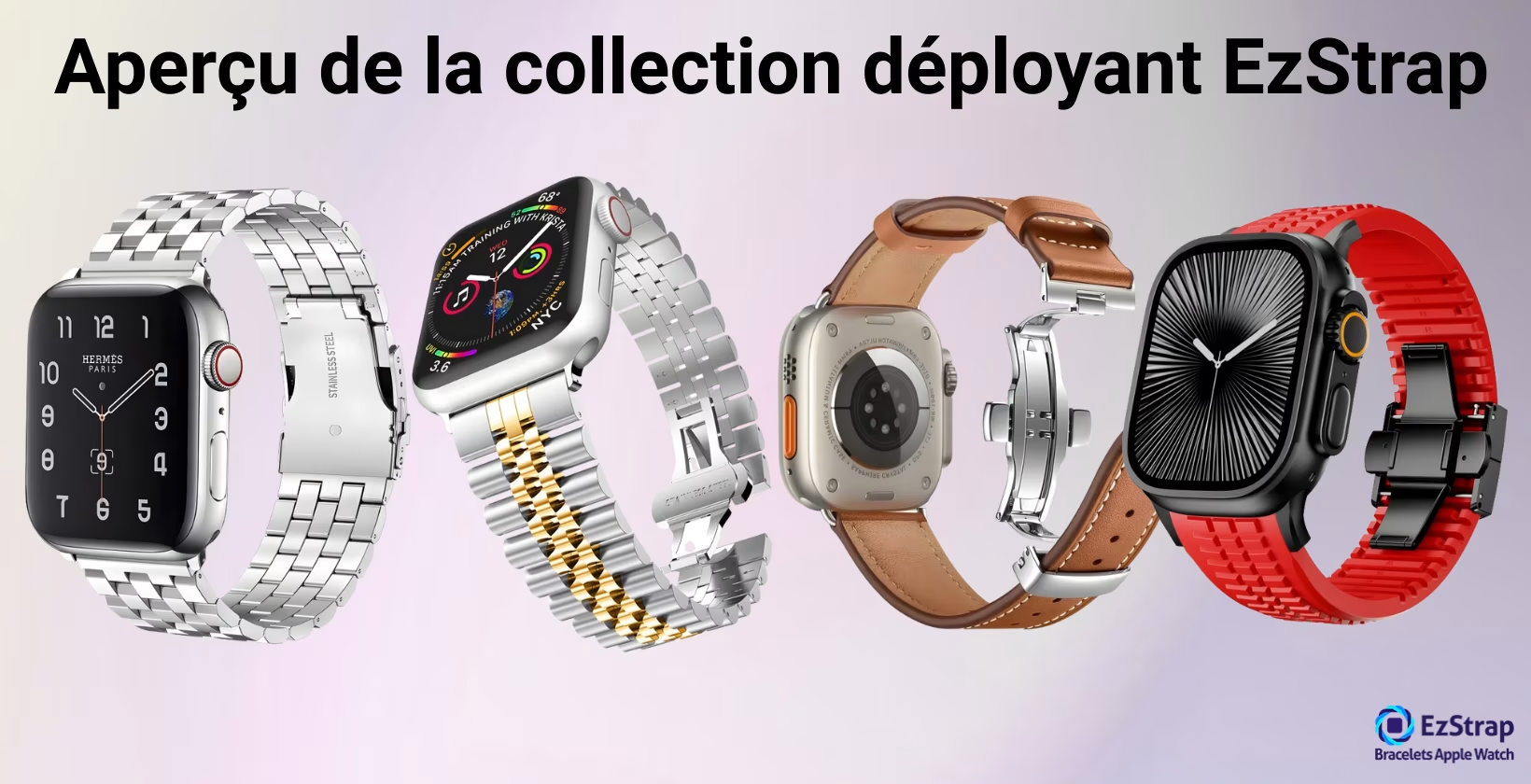
Also called a deployant buckle clasp, the deployant clasp is a watchmaking closing system using hinged metal blades that fold back on themselves to close the band. This type of clasp was introduced in the early 20th century to offer greater security and durability for watch bands. According to the Wristwatch Handbook (Schmidt, 2016), the purpose of this clasp is to rule out the risk of a watch dropping accidentally while it is being handled, while also making it easier to put on the wrist.
Apple and a few third-party manufacturers use it on link bands or high-end metal bands.
Technical characteristics
The mechanism relies on a set of metal hinges that fold into a "butterfly" or "single buckle" shape beneath the wrist. Pressing the side buttons releases the clasp for a controlled opening. This system limits the tension applied directly to the band, for better longevity.
| Advantages | Disadvantages |
|---|---|
| Security: better protection against losing the watch. Comfort and Practicality: quick opening and closing. Looks: premium look, ideal for metal bands and luxury leather ones. | Cost: expensive, generally associated with high-end bands (from €300). Weight: heavier than other buckles. Complexity: more complex mechanics that may need servicing after several years. |
In conclusion, the deployant clasp is a high-end solution offering an excellent compromise between security, comfort and elegance. Perfect for metal or premium leather Apple Watch bands, it is aimed at wearers looking for a solid, refined closing system.
6. Elastic
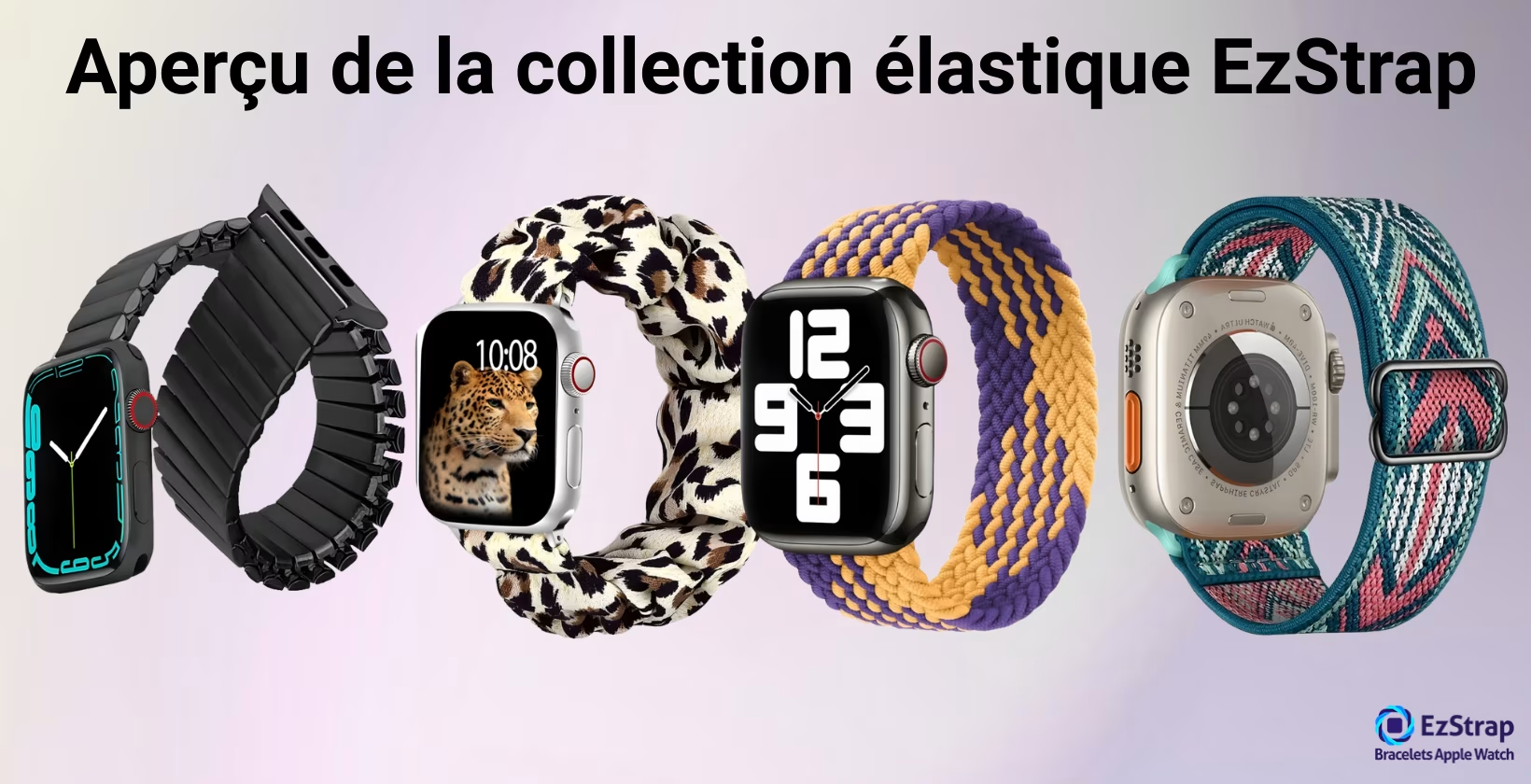
The elastic clasp, or clasp-free design (called "Solo Loop" by Apple), relies on a system with no fastener or buckle, where the band forms a continuous loop of stretchy material that you slip on directly. As explained in Textile Technology and Design: From Interior Space to Outer Space (Sinclair, 2014) regarding the elastic polymers used in this category, their high elasticity and shape memory after stretching keep the band in place without any special device.
Technical characteristics: Band made of stretchy silicone or braided thread with elastane fibres. Available in different sizes (S to XL) depending on the wrist circumference. No mechanical parts that could break.
| Advantages | Disadvantages |
|---|---|
| Absolute simplicity: no clasp to handle. Very quick to put on. Maximum comfort: thanks to the elasticity. Light and discreet: suited to everyday wear. | You need to choose a precise size to ensure a good hold. Loss of elasticity: after a certain period of use. Less suitable: for very slim or very wide wrists because of the limited size range. |
In conclusion, the elastic closing system relies on simplicity and comfort by removing any closing device altogether. It is a practical, minimalist option for users looking for a band that is easy to slip on, but it requires a precise size adjustment.
7. Magnetic
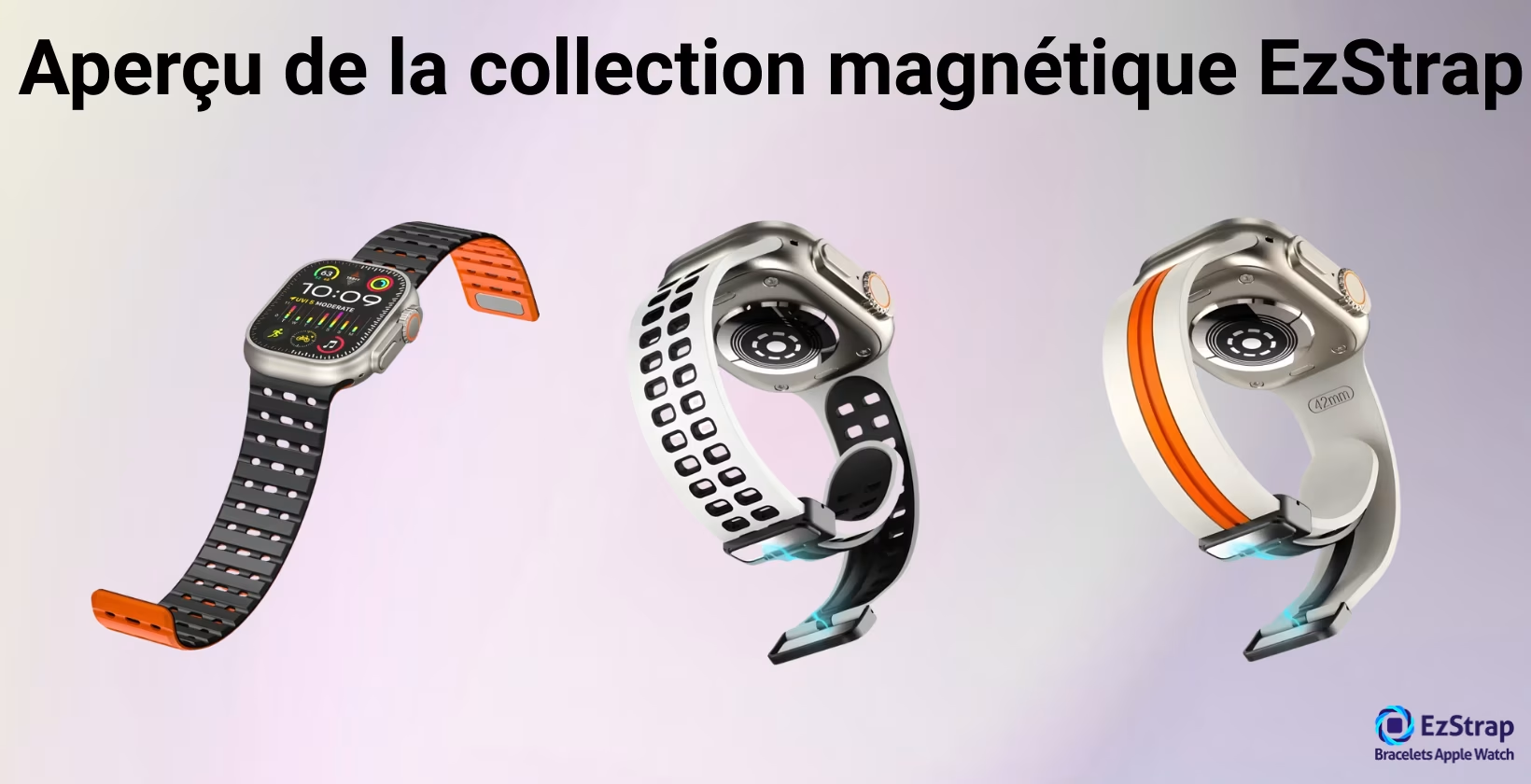
The magnetic clasp is a closing mechanism that uses the attractive force of magnets to hold the two ends of a band together. Its use has spread across modern accessories because it is simple and quick to use. According to Fundamentals and Applications of Magnetic Materials (C.J. Choy, 2016), permanent rare-earth magnets provide a constant, lasting holding power, which suits wearable devices such as smartwatches.
Technical characteristics: A type of clasp used by Apple on several models (Milanese mesh, leather bands with a magnetic closure). The magnets are built into the structure of the band so as to leave the buckle invisible and allow smooth, continuous adjustment of the band with no holes or visible mechanical parts.
| Advantages | Disadvantages |
|---|---|
| Closes and opens very quickly. Adjusts continuously: thanks to the mobility of the clasp. Clean look: no visible buckle. | Possible feeling of loosening during sustained sporting activity. Magnetic strength that may weaken over time. Higher cost: than classic clasps (€99 to €149 for official Apple models). |
In conclusion, the magnetic clasp combines modernity and practicality with its smooth adjustment and minimalist design. Ideal for everyday or professional use, it is less suited to contexts requiring an ultra-secure fixing.
8. Knot
The knot clasp, a manual closing device, consists of tying the two ends of a band to adjust it and fasten it around the wrist. Present since Antiquity in textile adornments and handmade jewellery, it relies on a principle of winding and tightening. According to Textiles: A Handbook for Designers (S. Tortora, 2010), knots are one of the earliest means of fastening in the history of clothing and accessorising.
In the world of Apple Watch bands, this system is mainly found on handmade creations in fabric, cord, leather or beads.
Technical characteristics: The knot clasp is generally made with textile cords, braided leather or elastic threads. On some models, a sliding knot is used, which makes it easier and quicker to adjust the circumference of the band.
| Advantages | Disadvantages |
|---|---|
| Simple, universal execution. Handmade, customisable look. Adaptable: to many materials (fabric, leather, beads). | Less practical: than modern clasps, handling sometimes slow. Poorer hold: during sport. Limited durability: if the fibres wear out over time. |
The knot clasp therefore stands out for its handmade, customisable look. It is less practical and secure than mechanical or magnetic clasps, but appeals to fans of original or handmade Apple Watch bands.
9. Hook-and-Loop / Velcro
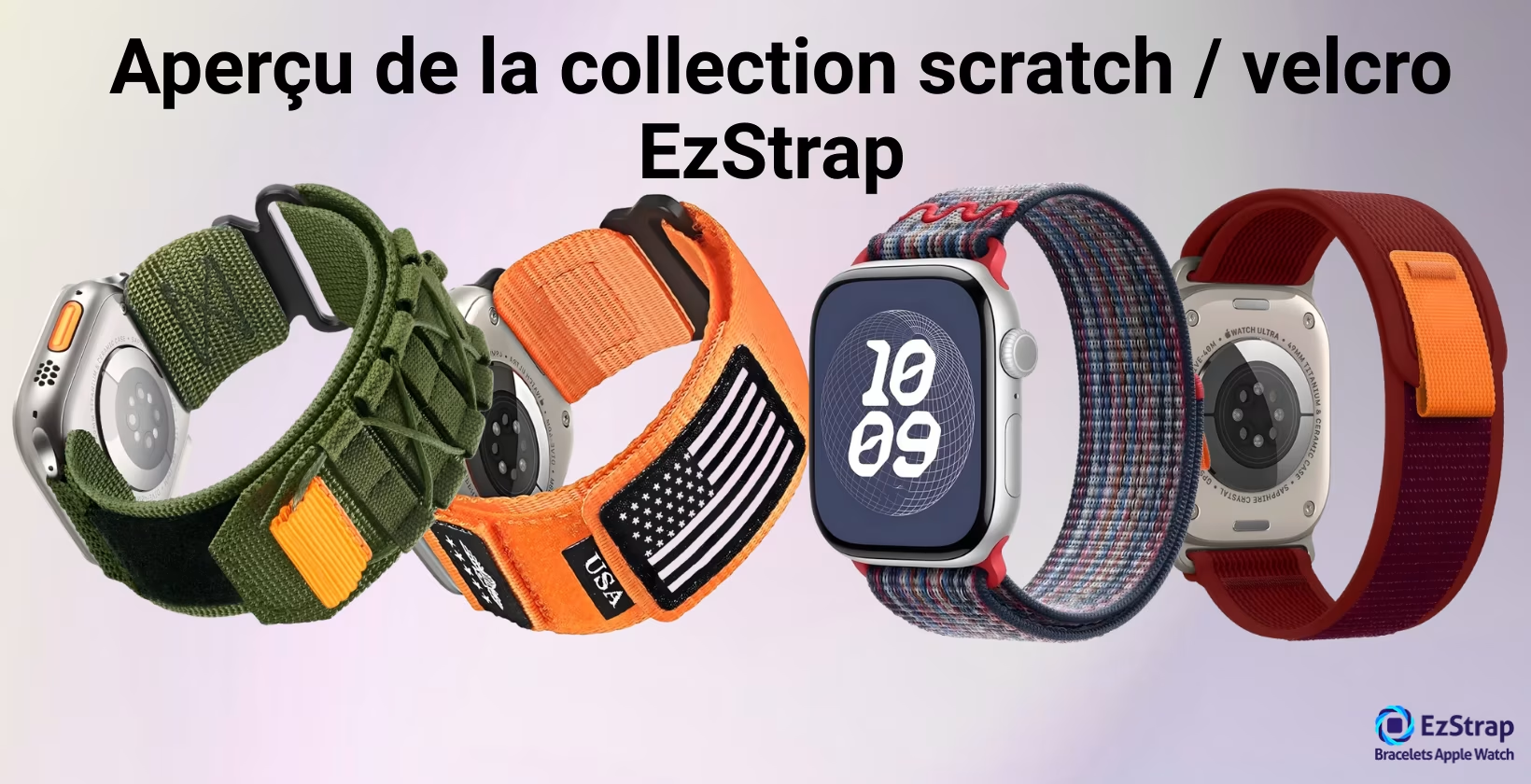
The hook-and-loop clasp, or Velcro, is a closing device invented in 1941 by the Swiss engineer George de Mestral, based on pairing two textile strips: one covered in tiny hooks and the other in soft loops. As Velcro Companies: A Case Study in Innovation (Harvard Business Review 2016) noted, this mechanism, widely used for its simplicity and reliability, is found in clothing, sports equipment and accessories.
It is found on the woven nylon Apple Watch bands called Sport Loop.
Technical characteristics: The hook-and-loop closure works by mechanical grip between the hooks and the loops. It offers easy, precise adjustment, with a wide adjustment range. Apple's versions are made from light, airy materials to promote everyday comfort.
| Advantages | Disadvantages |
|---|---|
| Ultra-quick to fit and remove. Continuous, flexible adjustment. Great comfort, ideal for sport and everyday wear. | Hooks and loops wear down over time. Loss of grip after several hundred uses. Look perceived as less attractive than metal or leather buckles. |
In conclusion, the hook-and-loop (Velcro) clasp combines simplicity and practicality. It suits sporting and everyday use, but its lifespan is limited compared with mechanical or magnetic buckles.
Which brands officially collaborate with Apple?
1. Hermès
The house of Hermès is a French company founded in 1837, originally specialising in leather goods and saddlery, and operating in the artisanal luxury sector. It is known for the quality of its leathers and its craftsmanship. Since 2015, Hermès has partnered with Apple to offer unique bands for the Apple Watch (The Hermès Way: Art, Craft, and Tradition in a Modern Luxury Brand, Chevalier and Mazzalovo, 2018). Hermès's strength lies in sustaining artisanal know-how combined with contemporary innovation (which is why the partnership with Apple makes sense).
Technical details: Apple Watch Hermès bands are made from Barénia, Swift or Epsom calfskin, emblematic leathers of the house, and hand-stitched in the Hermès workshops in France. They are available in several iconic designs (Simple Tour, Double Tour, Attelage) and fitted with clasps and buckles inspired by the equestrian world.
| Advantages | Disadvantages |
|---|---|
| Artisanal heritage: Hermès's unique leatherworking know-how Luxury and prestige: turns the Apple Watch into a high-end fashion accessory Exclusivity: limited collaborations and premium image | Very high price: generally above €350 and can exceed €1000 Leather sensitivity: to moisture and perspiration Limited use: mainly suited to formal settings, not recommended for sport |
2. Nike
Founded in 1964, Nike is an American company specialising in sports equipment and is one of the world leaders in its sector. In 2016, Apple and Nike unveiled a strategic partnership around the Apple Watch Nike, with a series of exclusive bands and watch faces. According to the Journal of Business Strategy (Carter and Semon, 2017), these collaborations with sports brands such as Nike rest on a synergy between technological innovation and global sports culture.
Technical characteristics: Nike bands for the Apple Watch are made from perforated fluoroelastomer (Nike Sport Band) or lightweight woven nylon (Nike Sport Loop). The design prioritises breathability, lightness and visibility, with bright, reflective colours. Designed for intensive sport (running, fitness, training), the bands offer perfect ventilation thanks to the holes. They are official Apple partners, guaranteeing consistency between the bands and software compatibility (exclusive Nike watch faces).
| Advantages | Disadvantages |
|---|---|
| Affordable price: generally between €49 and €59 Breathability: perforated bands designed for sport Comfort: light and suited to physical activity | Very sporty style: a distinctive look, less versatile in a dressy setting Limited collection: narrower choice than the standard Apple range |
Nike, with its official partnership, gives the Apple Watch an unapologetically sporty identity. Its bands, focused on performance and comfort, reinforce the watch's dynamic image for athletes and sportspeople.
What are the best specialist third-party Apple Watch band brands?
Beyond the official partnerships, many third-party brands have specialised in making Apple Watch bands, offering a range of alternatives, from high-end artisanal to technical or affordable models, so you can find a style and use that match your expectations. Here are a few examples of well-regarded third-party Apple Watch band brands.
1. Nomad
Nomad is an American brand founded in 2012 in Santa Barbara (California), specialising in high-end accessories for Apple products. Thanks to its use of premium materials, it has become one of the leading third-party references for Apple Watch bands. According to The Verge (2019), Nomad has managed to combine a design that is both minimalist and robust with durable materials such as Horween leather or titanium.
Technical characteristics: Nomad bands are mainly available in Horween full-grain leather (from Chicago), stainless steel, titanium and FKM (reinforced fluorinated elastomer). Each band is designed to withstand intensive daily use while favouring a clean, masculine look.
| Advantages | Disadvantages |
|---|---|
| Use of superior-quality materials (Horween leather, titanium, steel) Minimalist, understated design for everyday and professional use alike Great sturdiness and hard-wearing finishes | Higher price than the average for third-party brands (between €80 and €250) More masculine look with few colourful models Range sometimes hard to find in Europe |
In conclusion, Nomad is the archetype of the high-end, sturdy third-party Apple Watch band brand, focused on material quality and stylistic restraint.
2. Spigen
Spigen is a South Korean company founded in 2008, renowned for protective accessories for smartphones, tablets and smartwatches. The brand gained international recognition with its tough cases and functional accessories. According to Business Wire (market report, 2021), Spigen is one of the leading brands in the mobile protection accessories market, thanks to its strategy focused on durability and value for money.
This expertise has been applied to Apple Watch bands, with materials often chosen to offer both protection and practicality.
Technical characteristics: Spigen bands for the Apple Watch are mostly made of silicone, polyurethane or metal, with rugged looks inspired by the outdoors. The brand also offers hybrids combining a protective design with a sporty style.
| Advantages | Disadvantages |
|---|---|
| Accessible price: good value for money for everyday use Sturdiness: robust construction, designed to protect Compatibility: well suited to Spigen cases and active use | Little prestige: rarely stand out for their refinement (vs premium brands like Nomad, Hermès) Bulky look: design often imposing, poorly suited to users seeking discretion Utilitarian finishes: materials more functional than elegant |
In conclusion, Spigen is establishing itself more as a third-party Apple Watch accessories brand focused on functional, affordable bands, favouring robustness/protection over refined style.
3. EzStrap
EzStrap is a specialist Apple Watch accessories shop founded in 2019. It is aimed at enthusiasts who want to find the latest accessories compatible with Apple's smartwatch.
EzStrap has quickly established itself as a reference brand in Europe thanks to its positioning focused on excellent value for money.
A market study published by Statista (2022) on the development of connected accessories shows that emerging specialist brands such as EzStrap meet a growing demand for reliable, affordable products, serving a broader audience.
Technical characteristics: EzStrap bands come in a variety of materials: leather, metal, nylon, silicone, plastic, wood, stones/beads and fabric. The brand ensures quality finishes and designs suited to various uses: sport, everyday, or dressy wear.
EzStrap strives to offer models that fit every generation of Apple Watch, from the first to the Ultra.
| Advantages | Disadvantages |
|---|---|
| Apple Watch specialisation: unique expertise across the full range of compatible accessories Demanding selection: every product is tested and checked before going on sale French brand: local customer service and reliable order tracking | Single focus: dedicated solely to the Apple Watch world Bold designs: some models stand out and do not aim for visual neutrality International reputation still growing: brand still little known abroad |
A young French specialist brand, EzStrap positions itself between a quality-focused approach and excellent value for money. It is aimed at users looking for reliable, accessible Apple Watch accessories, with no compromise on style or quality.
4. JUUK
Founded in Hong Kong in 2015 by Eugene Ho, a former designer in Swiss and Japanese watch factories, the JUUK brand has specialised in high-end metal bands for the Apple Watch. It combines traditional watchmaking design with a modern take. According to The Watch Manual (2020), the brand embodies a new wave of small specialist brands, able to match the know-how of the big watchmaking houses with quality materials and meticulous work.
Technical characteristics JUUK makes its bands from 6000 and 7000 aluminium, stainless steel or titanium, and has them precision-machined. Their design echoes that of luxury mechanical watch bands, with polished or brushed links and secure deployant buckles. Some models even sport designs inspired by cars and sport, such as the Vitero range.
| Advantages | Disadvantages |
|---|---|
| Specialised know-how: in metal and watchmaking finishes Watchmaking design: inspired by classic watchmaking with a premium finish Varied range: suited to different styles (sporty, elegant, dressy) | High price: compared with generalist third-party brands (€150 to €350) Metal-focused range: little variety of materials Limited distribution: hard to access outside the official online shop |
JUUK is a brand specialising in high-quality metal Apple Watch bands that prioritises precision and watchmaking aesthetics to win over fans of fine watches.
5. Bellroy
Bellroy, an Australian brand founded in 2010, positions itself in leather goods and high-end accessories, building on a brand philosophy centred on sustainability and ethical production. According to the Journal of Cleaner Production (Niinimäki and Hassi, 2011), companies that highlight certified materials and responsible processes meet a growing demand from consumers concerned about the environmental impact of their purchases.
Technical characteristics: Bellroy bands are made from Leather Working Group (LWG) certified leather, ensuring eco-responsible tanning. The brand pairs this premium leather with soft polymer linings to improve comfort and moisture resistance. The models opt for a clean, professional design, with particular care taken over the stitching and finishing.
| Advantages | Disadvantages |
|---|---|
| Considered comfort: contoured shape that fits the wrist well Premium materials: ecologically tanned leather and durable polymers Ages well: natural patina that enhances the leather over time | Higher prices: than classic leather bands (€80 to €150) Leather-focused range: less choice of materials Limited distribution: less present in Europe than in the Australian and American markets |
Bellroy is a third-party brand specialising in premium leather Apple Watch bands, which combine elegance, comfort and durability thanks to its ecological commitment and artisanal know-how.
How can you get an unofficial "luxury brand" style band (Rolex, Gucci, Louis Vuitton, etc.)?
Since Apple Watch bands inspired by these luxury brands are not officially sold by those houses, third-party manufacturers offer models that draw on their aesthetic codes. The aim is to choose reputable sellers and confirm quality/compatibility before buying, as follows:
-
Look for a specialist reseller: Consult marketplaces such as: Etsy, Amazon, eBay where some sellers offer inspired bands (Rolex, Gucci, Dior). Examine their ratings, detailed reviews and sales volumes.
-
Decide on the brand or style you want
Examples of typical styles:
- Lacoste: smart sport, textiles and logos.
- Louis Vuitton: Monogram patterns.
- Gucci: green/red stripes, GG patterns.
- Nomad: premium minimalism.
- Richard Mille: car/sport inspiration.
- Swarovski: crystal inlays.
Look at the appearance of the links (type: Rolex):
- Rolex: solid links, Oyster/Jubilee type
- Hugo Boss: ordinary, basic leather
- Dior: couture feel
- Michael Kors: flashy gold/rose
- Tommy Hilfiger: w/b/r codes
- The North Face: chunky outdoor
- Karl Lagerfeld: strict black
-
Check materials and finishes Prefer stainless steel, leather (full-grain or corrected-grain), tightly woven nylon, good-density silicone. Check the clasp (deployant/secure), the stitching, the machining tolerances.
-
Compare prices
Usual range: €30 to €120 depending on material and finish. Rule out prices that are too low and identify listings with real close-up photos.
-
Check compatibility
Take the right width for the Apple Watch: 38/40/41 mm and 42 mm on Series 10 and 11, or 42 mm on Series 1 to 3 and 44/45/46/49 mm. Make sure it has Apple's own attachment system.
-
Buy safely
Favour platforms with buyer protection (returns, refunds). Check delivery times, fees, after-sales policy and availability of spare links/end pieces.
Summary: find a reputable seller, an inspired design (Gucci, Rolex, Louis Vuitton, etc.) and check the material/finish carefully, then buy through a safe platform.
Since choosing the Apple Watch is as important as choosing your band, do not hesitate to consult our guide to choosing the right Apple Watch based on your needs.
How can you get novelty bands such as Disney, Harry Potter, Pixar, etc.?
Novelty bands based on famous licences (Disney, Harry Potter, Pixar, Marvel, Star Wars, etc.) are not sold officially by Apple, but many third-party manufacturers and shops offer alternatives.
-
Choose a licence or theme: Decide whether you prefer a band with characters (e.g. Mickey, Harry Potter, Toy Story) or with a symbolic motif (e.g. the Hogwarts house crests, the Marvel logo).
-
Search on the right platforms: Use Etsy, Amazon, eBay, where independent creators and third-party sellers offer unique, original bands with printed or engraved patterns.
-
Check the quality of the material: Favour printed silicone, woven nylon or engraved leather. Check colour fastness (UV printing, heat sublimation) and the sturdiness of the attachments.
-
Check compatibility with your Apple Watch: Check the case size (38/40/41 mm and 42 mm on Series 10 and 11, or 42 mm on Series 1 to 3 and 44/45/46/49 mm). Product listings generally state which sizes are compatible.
-
Compare prices and personalisation options: On average, novelty bands sell for between €15 and €50. Some sellers offer to personalise with a first name, a quote or a particular colour.
-
Order through a secure platform: Place your order on a site offering buyer guarantees. Read customer reviews and check delivery times (often long for handmade creations).
Summary: to get a novelty band inspired by your favourite universes (Disney, Pixar, Harry Potter, Marvel…), just choose the theme, find a reputable seller, check the materials and size, then order from a secure shop.
How do you change an Apple Watch band?
Changing the band on your Apple Watch lets you change your look or replace a worn one. Apple's attachment system is designed to be simple and quick, with no special tool. Here are the steps to follow.
-
Prepare a safe space
Place the Apple Watch on a soft, clean surface (e.g. a microfibre cloth) to avoid scratching the screen or the case.
-
Locate the release buttons
Turn the watch over: two small flat buttons are on the back, at the top and bottom of the case, right beside the band slots.
-
Press the release button
Keep the button pressed with one finger. This unlocks the retaining mechanism that holds the band in place.
-
Slide the band out
While holding the button, slide the band sideways out of its slot. Repeat for the other side.
-
Insert the new band
Align the connector of the new band with the slot and push it gently until you hear a small click or feel it lock firmly.
-
Check it is properly attached
Tug lightly on the band to make sure it is locked before wearing the watch.
Summary: replacing an Apple Watch band takes a few seconds thanks to the slot system and the release buttons. No tools required: only a final check of the lock ensures a secure fit. To find out more, you can read our detailed guide to changing your Apple Watch band.
How do you fit a classic watch band on an Apple Watch?
It is possible to fit a classic watch band on an Apple Watch using special adapters. These small parts clip into the slots on the watch and let you attach a standard watch band. Here is how to do it, step by step.
-
Get compatible adapters
Choose a set of adapters that matches the width of the Apple Watch case (38/40/41 mm and 42 mm on Series 10 and 11, or 42 mm on Series 1 to 3 and 44/45/46/49 mm).
-
Prepare the classic watch band
Check that the chosen band is fitted on standard spring bars of 18, 20, 22 or 24 mm, depending on the size of the adapter.
-
Mount the band on the adapter
Using a fitting tool (spring bar tool), put the band's spring bar into the adapter. Make sure it is properly seated.
-
Attach the adapter to the Apple Watch
Slide each adapter into the slots provided on the watch until you hear the locking click.
-
Check that it is secure
Pull gently on the band to make sure the adapter is firmly fixed and the spring bars do not move.
Summary: fitting a classic watch band on an Apple Watch requires specific adapters. Compatibility is worked out from the width of the case (Apple Watch) and the width of the band (watchmaking standard).
Example: a 44 mm Apple Watch needs a 44 mm adapter and accepts a classic 22 mm watch band.
How do you clean and look after an Apple Watch band?
Cleaning and looking after your Apple Watch band extends its life and keeps it comfortable. Cleaning varies depending on the material. Silicone, leather, metal, nylon, fabric: here are the general steps to follow.
-
Remove the band from the watch
Unclip the band from the Apple Watch to avoid any contact with the case during cleaning.
-
To clean a silicone or fluoroelastomer band
Use lukewarm soapy water and a soft cloth. Rinse thoroughly, then dry with a lint-free cloth.
-
To clean a leather band
Wipe with a slightly damp cloth. Then apply a care product suited to leather. Never immerse leather.
-
To clean a metal band (steel, titanium)
Wipe with a damp cloth, optionally dampened with mild soapy water. Dry immediately to avoid marks.
-
To clean a nylon or fabric band
Wash gently by hand with lukewarm water and mild soap. Rinse, then leave to air dry, away from direct heat.
-
Check the condition of the band regularly
Check for wear (stitching, elastics, links) and replace the band if there are signs of weakness.
Looking after an Apple Watch band depends on the material. Gentle cleaning is needed for synthetic materials, whereas leather needs a specific treatment.
Example: a nylon band washed by hand keeps its colour on average 20% longer than one washed in a machine.
What are the best Apple Watch bands to give as a gift?
Giving an Apple Watch band as a gift lets you personalise a loved one's smartwatch while adding a touch of style. The choice varies according to the person's profile, how they use the watch and their tastes. Here is a list of the best types of bands to give.
-
Elegant leather band A timeless classic that combines refinement and comfort. Perfect for a formal or professional gift. Price range: €80 to €300. Advantage: premium look. Drawback: regular care required.
-
Metal band (steel or Milanese loop) For those who like a modern, robust style. Suited to everyday use at work. Price range: €100 to €400. Advantage: durability and elegance. Drawback: heavier weight.
-
Silicone sport band For active people who run, do fitness or play a sport outdoors. Price range: €40 to €60. Advantage: comfort and water resistance. Drawback: less dressy style.
-
Woven nylon band A light, colourful gift with a casual or fun look. €30 to €70. Advantage: breathable, wide choice of patterns. Drawback: wears out quickly compared with metal.
-
Luxury brand bands (Hermès, Bellroy, JUUK) For fashion fans and lovers of prestige products. €300 to €800. Advantage: prestigious, exceptional quality. Drawback: exorbitant price.
Conclusion: giving an Apple Watch band as a gift means considering the recipient's lifestyle. Leather and metal suit formal occasions, silicone and nylon suit everyday and sport use, and luxury brands suit exceptional occasions.