Apple Watch and sleep apnoea: how it works, interpreting the results and medical limitations
Sleep apnoea is a breathing disorder characterised by pauses or significant reductions in breathing during sleep. According to the SFRMS (French Society for Sleep Research and Medicine), sleep apnoea affects between 4% and 10% of the French population, or 2.5 to 6.4 million people. Sleep apnoea causes repeated interruptions of night-time breathing, a drop in blood oxygenation and frequent awakenings. According to the American Academy of Sleep Medicine, sleep apnoea is defined as the occurrence, during sleep, of stoppages in airflow lasting at least 10 seconds and occurring 5 or more times per hour of sleep.
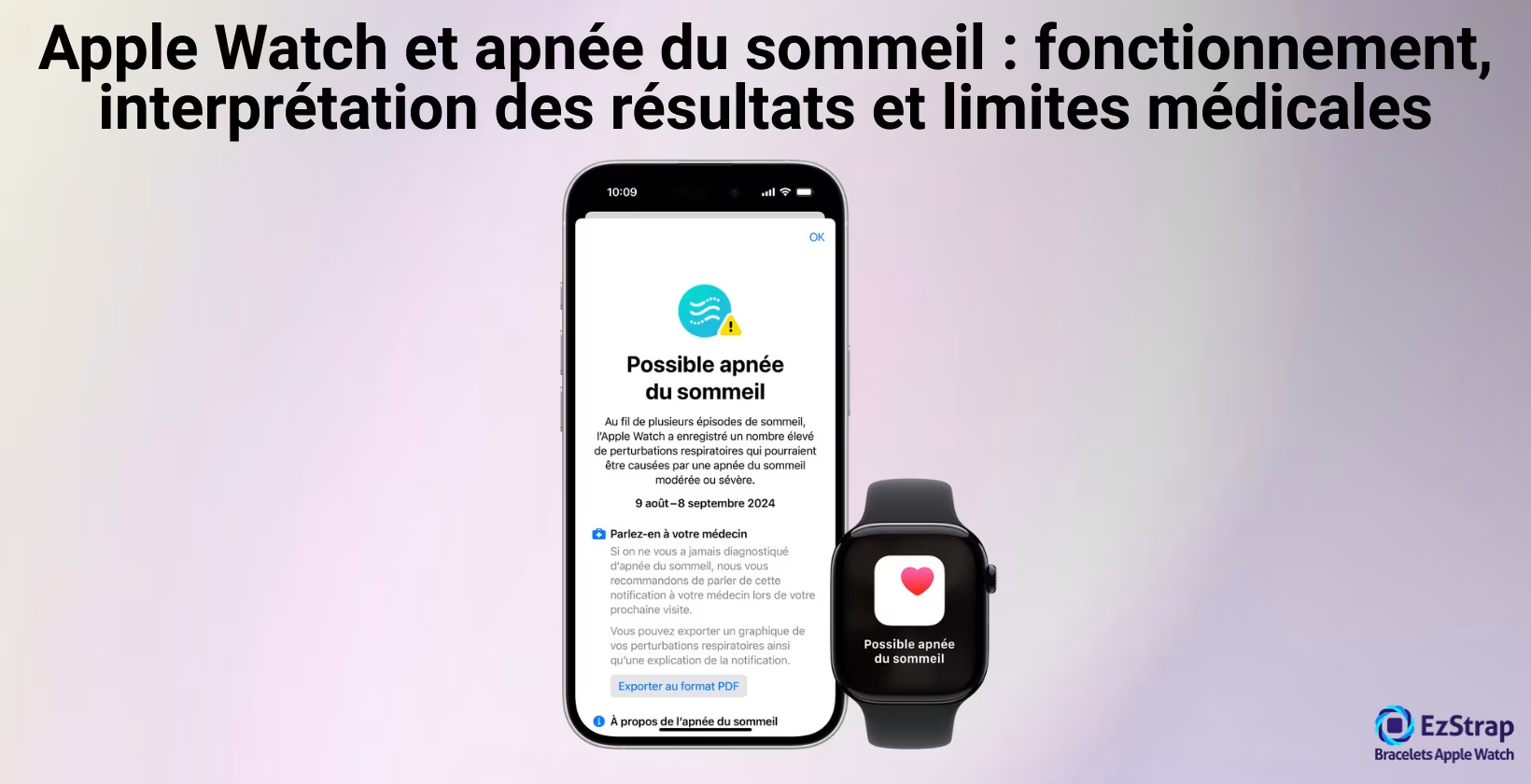
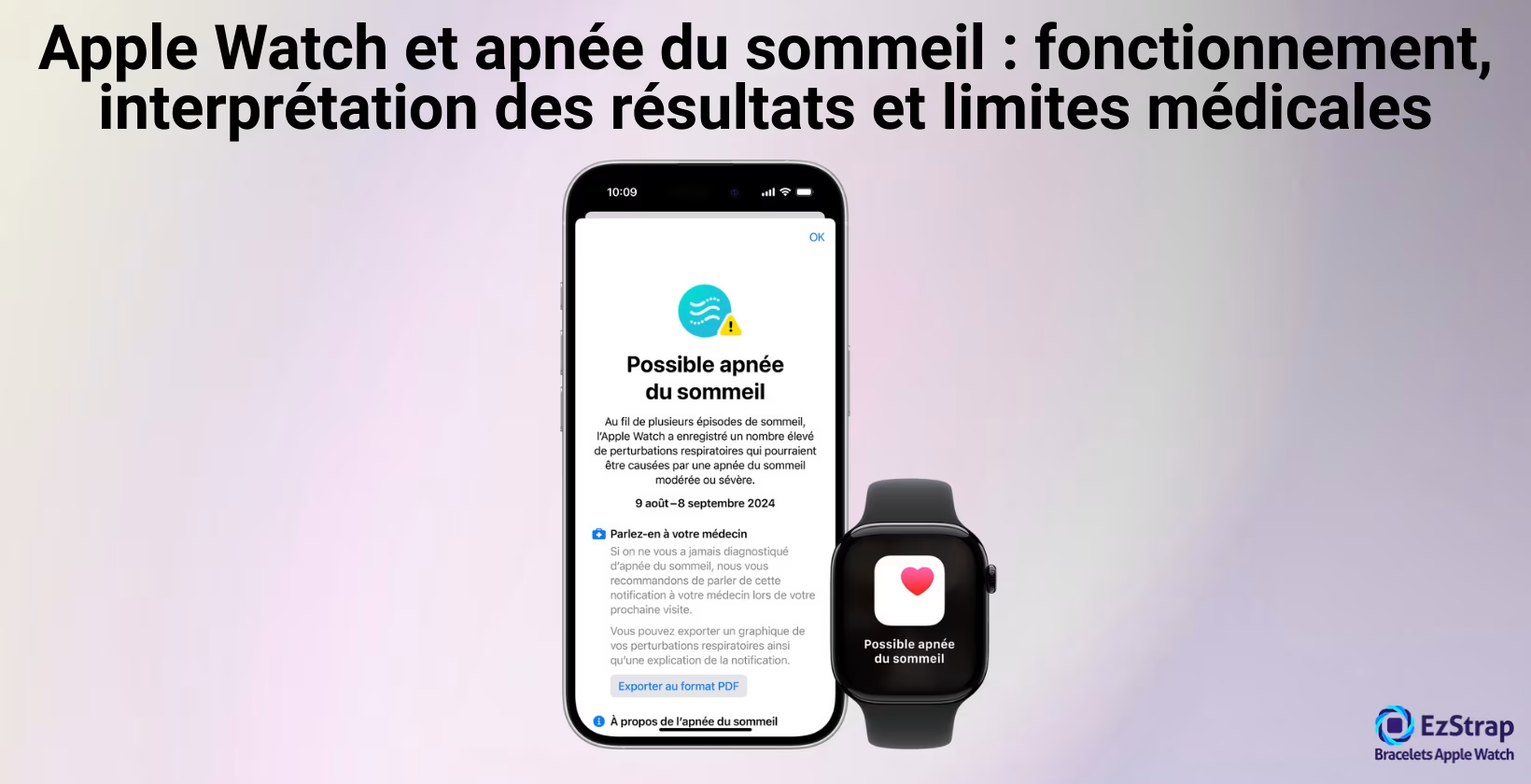
Sleep apnoea detection is an Apple Watch feature announced by Apple on 9 September 2024. This feature lets users receive early alerts about potential breathing disorders.
This article explores how sleep apnoea detection works on the Apple Watch, its practical applications, its clinical limitations, the other diagnostic devices and the existing treatments for this condition.
Have you received a notification?
A single "Elevated" night is nothing to worry about: it is the repetition of "Elevated" nights that matters. The "Possible Sleep Apnoea" notification is rarely sent in error — specificity of 98.5%, meaning fewer than 2% false positives — but it remains a screening signal, not a medical diagnosis. Check for recurrence in the Health app, export the PDF report and see your doctor: see what to do.
What types of sleep apnoea are there?
There are three types of sleep apnoea.
- Obstructive apnoea, which accounts for most cases and is caused by a blockage of the upper airway due to relaxation of the throat muscles.
- Central apnoea, which is rarer and results from a temporary absence of breathing signals sent by the central nervous system.
- Mixed apnoea, combining both mechanisms and found in a minority of observed cases.
Sleep apnoea causes objectively measurable physiological changes that make it easier to detect. Apnoeic episodes cause a drop in blood oxygen saturation (SpO₂) that can reach 60–70% in severe forms, whereas its normal value is between 95 and 100%. Heart rate can also show significant variations when breathing resumes.
What is the difference between sleep apnoea detected by the Apple Watch and a medical diagnosis?
Apnoea detected by the Apple Watch is not a professional medical diagnosis: the methods, accuracy and clinical value are different. The Apple Watch serves as a preliminary screening that identifies breathing disturbances; it cannot be equated with a diagnosis based on validated specialist tests, which affects treatment decisions according to the AASM (American Academy of Sleep Medicine).
The following table summarises the main differences between these two approaches.
| Criteria | Apple Watch | Medical diagnosis |
|---|---|---|
| Method | Algorithm based on the wrist accelerometer to detect breathing disturbances | Full polysomnography with EEG, ECG, SpO₂, airflow, respiratory effort |
| Observation period | Analysis over several nights, up to 30 days in Apple's clinical study | 1 to 2 nights in a laboratory or at home |
| Overall accuracy | Sensitivity 66.3%, specificity 98.5% according to the FDA-validated study (Apple, 2024) | Diagnostic reference considered the most reliable by the AASM |
| Severe apnoea detection | Sensitivity ~ 89% for severe apnoea (AHI ≥ 30) | Reliable detection of all severity levels |
| Qualified staff | Automated algorithm without medical supervision | Certified sleep technologist and specialist doctor |
| Approximate cost | Price of the watch (€399–799) | Variable cost, often €800–1,500 depending on the centres and coverage |
| Accessibility | Available immediately to users of compatible Apple Watch models | Waiting times vary depending on the availability of specialist centres |
| Legal value | Screening tool with no official diagnostic value | Recognised medical diagnosis opening the way to a prescription |
| Therapeutic follow-up | Notification prompting you to consult a doctor for confirmation | Direct prescription of treatment possible |
Which Apple Watch models can detect sleep apnoea?
Detection of signs of sleep apnoea on the Apple Watch is available on a selection of models fitted with the necessary sensors and technologies. Here is the list of compatible models and the specific characteristics of each.
- Apple Watch Series 9, 10 and 11
- Apple Watch Ultra 2 and 3
- Apple Watch SE 3
These models require watchOS 11 at minimum and a compatible iPhone to sync the data with the Health app. The analysis takes place over a period of 30 days to provide an overview of night-time breathing trends.
How does the Apple Watch monitor signs of sleep apnoea?
The detection of signs of sleep apnoea on the Apple Watch relies on automatic analysis of night-time micro-movements using the Apple Watch's accelerometer and a machine learning algorithm. It enables passive monitoring over several weeks by identifying night-time breathing disturbances potentially correlated with episodes of sleep apnoea.
-
Detecting breathing disturbances with the accelerometer: The Apple Watch's high-sensitivity accelerometer picks up micro-movements linked to the resumption of breathing after pauses. These movements at the wrist reflect unconscious muscular effort during apnoea episodes. The algorithm turns this data into a "Breathing Disturbances" metric that classifies each night as "Elevated" or "Not Elevated".
-
Analysing data over 30 days: The algorithm applies the same principle of analysing "Breathing Disturbances" values, but this time over non-contiguous 30-day windows. If, within the 30-day window, at least 10 nights have usable, valid values, and 50% or more of those nights have values classified as "Elevated", the notification is triggered. Otherwise, the algorithm stays silent.
-
Clinically validated algorithm (sensitivity / specificity): In the validation study carried out by Apple, "Sleep Apnea Notifications on Apple Watch — Clinical Validation Summary", when the feature was triggered, the sensitivity was 66.3% for moderate to severe cases (AHI ≥ 15) and the specificity 98.5%. The sensitivity reaches ~ 89.1% for severe apnoea (AHI ≥ 30).
-
Notification and data report: When the condition is met, the Apple Watch sends a notification flagging signs of sleep apnoea. The user can export a PDF report covering up to 3 months of "Breathing Disturbances" data for medical purposes. This feature is used for screening and not for a medical diagnosis.
How do you enable sleep apnoea detection?
Sleep apnoea detection requires prior setup in the Health app and compliance with specific eligibility criteria. This step configures the night-time monitoring settings and adapts the algorithms to the user's profile to optimise detection accuracy. The prerequisites include an age over 18, watchOS 11 or later, and an iPhone compatible with iOS 18 to sync the breathing data.
-
Check eligibility in the Health app Open the Health app on your iPhone and go to the "Browse" tab. Search for "Sleep Apnoea" or go to "Respiratory" then "Breathing Disturbances". Make sure your age is set to at least 18 years in your health data, as the feature is still unavailable for minors. Make sure your Apple Watch model is compatible and that you have watchOS 11.
-
Set up the personalised sleep profile Select "Set Up" in the Sleep Apnoea Notifications section. Enter your date of birth and say whether you have already been diagnosed with sleep apnoea. The algorithm relies on the accelerometer to detect night-time breathing disturbances. Turn on sleep tracking with Apple Watch and set up your rest habits in the Sleep app to optimise the monitoring periods.
-
Turn on sleep apnoea notifications Follow the on-screen instructions to turn on notifications. The analysis of breathing disturbances is carried out over 30 days to look for signs of moderate to severe apnoea. Notifications state the period analysed and give access to a PDF report to share with your doctor. Each night is classified as "Elevated" or "Not Elevated".
-
Adjust the band correctly Adjust the band so that it is snug but comfortable: good contact with the wrist is important. The accelerometer picks up the micro-movements linked to breathing interruptions. Wear the watch regularly while you sleep to ensure a reliable measurement. Turn on "Do Not Disturb" mode to avoid interruptions.
-
Start monitoring Wear the Apple Watch every night. To provide usable results and, where applicable, alerts, the algorithm needs a minimum of 10 nights of data over 30 days. Find your data in the Health app, under "Breathing Disturbances", and follow the trends over 1 month, 6 months and 1 year.
Get your 30 nights of measurements ready
Before letting the algorithm do its work, check that everything is in place and tick off each item as the nights go by.
How do you interpret the Apple Watch's "breathing disturbances" data?
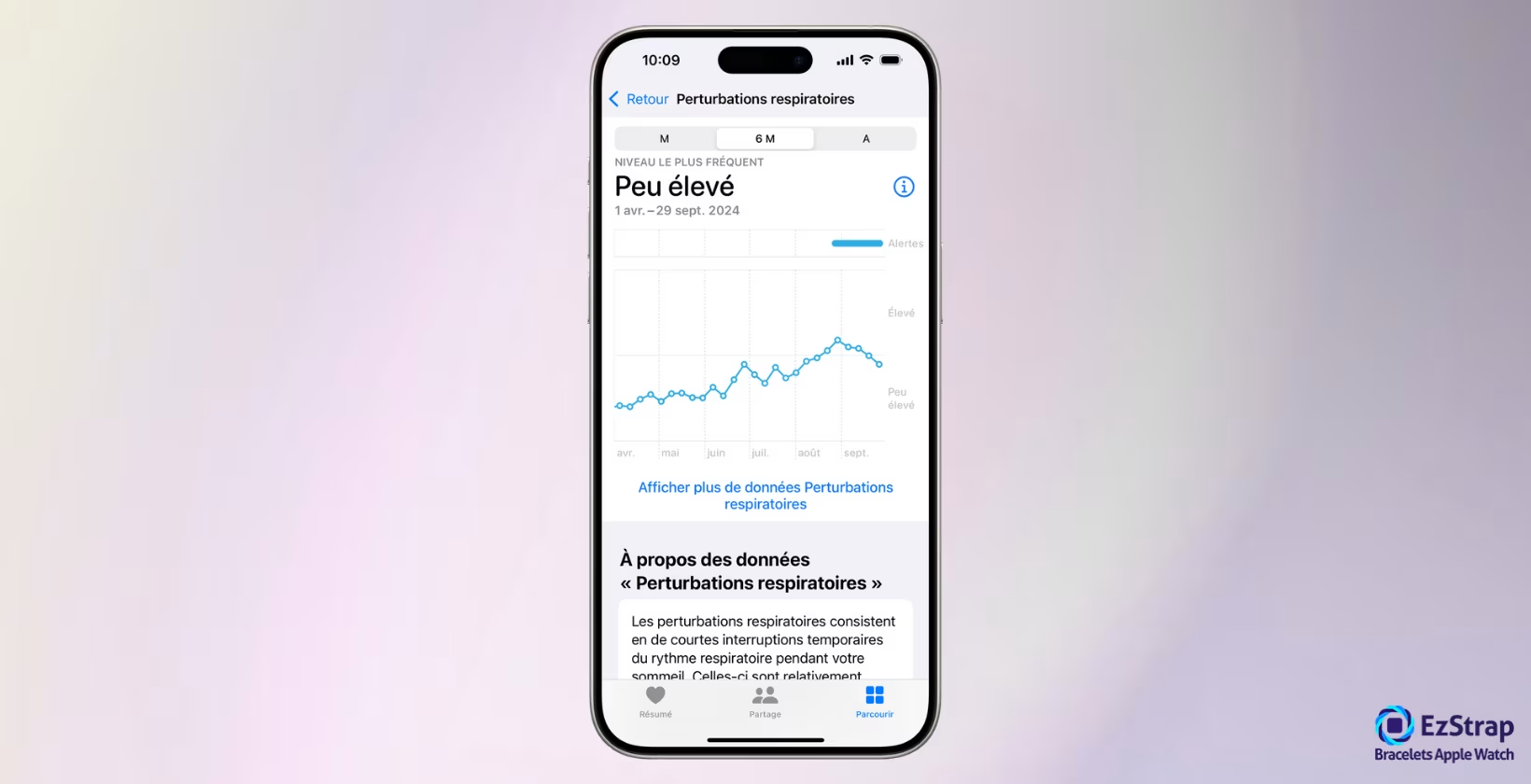
Each night, the Apple Watch measures breathing disturbances and classifies them as "Elevated" or "Not Elevated". The results can be seen in the Health app as a chart. If disturbances are regularly "Elevated" over at least 30 days, the app may generate a "Possible Sleep Apnoea" notification.
-
Open the Health app on your iPhone, search for "Respiratory" and tap "Breathing Disturbances". A chart with your night-by-night results appears.
-
"Not Elevated": the night's breathing disturbances are within a range considered normal; "Elevated": a large number of breathing disturbances.
-
A visualisation of your nights classified "Elevated" or "Not Elevated" over 30 days, 6 months, 1 year (and more soon) to spot trends and find out whether your disturbances are one-off or recurrent.
-
If at least 10 valid nights are analysed with more than half "Elevated" over 30 days, the "Possible Sleep Apnoea" notification may appear. This alert is a preventive screening signal, not a medical diagnosis.
-
A single "Elevated" night is not alarming: alcohol, a cold, tiredness and sleeping position all influence the results. It is the repetition of "Elevated" nights that matters and justifies a consultation.
What does the "possible sleep apnoea" notification mean?
The "possible sleep apnoea" notification is a pre-emptive alert indicating that the monitoring algorithm has identified abnormal breathing patterns exceeding predefined thresholds over several nights. This notification indicates that the data suggest a sleep-related breathing disorder, which must be medically evaluated for confirmation.
This notification, triggered according to algorithmic criteria, occurs when the Apple Watch detects elevated breathing disturbances on several occasions over a 30-day period. The algorithm requires a minimum of 10 nights of valid data, and evaluates the 30-day window. The notification is triggered when 50% or more of the nights analysed are classified "Elevated".
This delay before it appears follows the logic of monitoring over time, to avoid alerts based on insufficient data. In practice, the Apple Watch accumulates data night after night, classifies each session as "Elevated" or "Not Elevated" and only carries out an analysis every 30 days from the "Breathing Disturbances" metric.
The recommended course of action after this notification is a medical consultation for clinical evaluation and, if needed, a prescription for a diagnostic polysomnography.
The Apple Watch produces an exportable PDF report in the Health app covering up to three months of breathing disturbance data and educational information useful for the consultation.
The algorithm was developed on a large set of clinical data (over 11,000 nights in about 4,700 adults), drawn from sleep recordings made in the laboratory and at home, as described in the study "Estimating Breathing Disturbances and Sleep Apnea Risk from Apple Watch" (Apple Inc., FDA 510(k) K240929, September 2024).
What should you do if you get a sleep apnoea alert on your Apple Watch?
If you receive a sleep apnoea alert, here are the steps to follow.
-
Check the data Open the Health app and look in the history for the last 30 days, under "Respiratory" then "Breathing Disturbances", to see whether the alerts are recurrent. Make sure there are at least 10 nights of valid data (algorithmic criterion). Look for extrinsic factors: a change in treatment, a recent ENT infection, alcohol, sleeping position. Check how the band fits and that there is no technical interference.
-
Document your symptoms Keep a daily diary: perceived sleep quality, snoring reported by others, morning tiredness, headaches on waking, daytime sleepiness. Record your body mass index and neck circumference if possible. These details complement the watch data for clinical interpretation.
-
Export the full medical report Generate the PDF report in the Health app ("Export PDF") from "Breathing Disturbances". This report includes up to three months of data and educational information. Add a screenshot of the alert showing its date and the period concerned.
-
Consult your GP Your GP (with a request for a sleep-focused assessment) can recommend a pulmonologist or a sleep centre. Go to the appointment prepared with the data from the PDF (cardiovascular history, current treatments, factors affecting sleep).
To optimise your sleep and minimise the risk of sleep apnoea, you can read our detailed guide to the Apple Watch and sleep.
What other devices detect sleep apnoea?
Here is the list of other devices that detect sleep apnoea.
-
Hospital polysomnography (PSG) This is the absolute reference for detecting sleep-related breathing disorders; it records EEG, EOG, EMG, ECG, airflow, thoraco-abdominal effort, SpO₂, snoring, position, movements, etc. (AASM Manual for the Scoring of Sleep and Associated Events, American Academy of Sleep Medicine, updated editions; see also Sleep Study, StatPearls, Gerstenslager, 2023/2024).
-
Ambulatory respiratory polygraphy (type III / home sleep test) With, at a minimum, airflow, thoracic and abdominal respiratory effort, oxygen saturation and body position (without EEG, and therefore without detection of sleep stages and micro-arousals). For moderate to severe apnoeas (AHI ≥ 15 events/hour), studies report a sensitivity ≈ 80–90% depending on the protocols and populations tested.
-
ResMed ApneaLink / ApneaLink Air Ambulatory screening device for sleep apnoea. The device measures, at a minimum: airflow (nasal cannula), oxygen saturation and respiratory effort. Clinical studies report, for the ApneaLink, a sensitivity of around 91% and a specificity of around 95% for detecting moderate to severe apnoea (AHI ≥ 15).
-
WatchPAT (Itamar Medical / ZOLL) Portable device based on peripheral arterial tonometry (PAT), combined with SpO₂ and actigraphy. It provides an estimated apnoea-hypopnoea index and has shown good correlation with polysomnography in many clinical studies (e.g. Pépin J.-L. and colleagues, Sleep Medicine, 2020). It is used on an ambulatory basis as a validated alternative to polygraphy.
-
Overnight finger oximetry A simple SpO₂ sensor worn all night, allowing the oxygen desaturation index (ODI) to be calculated; useful as a first step, but it cannot distinguish obstructive from central apnoeas, nor micro-arousals.
-
Smart mattress sensors / non-worn devices (pressure sensors, ballistocardiography, etc.) Based on pressure sensors, accelerometers and ballistocardiographic signals, detecting movement, heart rate and breathing without a worn device, which improves comfort of use. Accuracy is lower for mild or central apnoeas compared with medical devices, with methodological variability between models and settings.
These solutions offer a range of alternatives from screening to formal diagnosis. PSG and certain validated devices remain necessary for a definitive diagnosis. Portable or wearable devices are suited to screening, monitoring or triaging cases while awaiting a PSG.
How reliable is the Apple Watch at detecting sleep apnoea?
The Apple Watch has a moderate ability to detect sleep apnoea, with a sensitivity of 66.3% and a specificity of 98.5% for screening moderate to severe cases (FDA 510(k) clearance K240929, Apple Inc., 2024). These results place the watch in the class of effective early-screening devices, but not devices that allow a formal medical diagnosis.
The clinical validation carried out by Apple and submitted to the FDA involved about 1,300 participants analysed and shows that the Apple Watch correctly detects 66.3% of confirmed cases of sleep apnoea (sensitivity) and avoids 98.5% of false positives in sleepers without apnoea (specificity). An independent study, published in 2025 in Sleep and Breathing by Joosten and colleagues ("Accuracy of Apple Watch Accelerometer-Derived Signals for Detecting Moderate-to-Severe Sleep Apnea") reports, in 61 participants, a correlation of r = 0.93 with the apnoea-hypopnoea index measured by polysomnography. In this study, using only the Apple Watch's accelerometer data achieved 100% sensitivity and 90% specificity for moderate to severe apnoea, which suggests that the approach based on the inertial measurement unit comes close to the performance of type 3 home screening devices.
However, the reliability of its detection is influenced by various factors, including how well the band is worn and the length of monitoring. Apple's algorithm is based solely on accelerometer data and requires at least 10 valid nights over 30 days to send a notification. Apple states that its method favours high specificity to reduce false positives, at the expense of a reduced sensitivity for mild cases.
Can a poorly fitted band skew the measurements?
Yes, a poorly fitted band can degrade the quality of the Apple Watch's sleep measurements. A band that is too loose notably prevents a reliable reading from the accelerometer, which measures the night-time micro-movements essential to detecting breathing disturbances. This sensitivity also applies to photoplethysmography (PPG), used to analyse heart rate and night-time physiological trends (cf. Tamura T., 2014, Wearable Photoplethysmographic Sensors—Past and Present, Electronics).
The Apple Watch's optical sensors rely on green and infrared LEDs coupled with photodiodes to analyse changes in blood volume. A band that is too tight compresses the vessels and alters the signal, whereas a band that is too loose causes loss of contact and motion artefacts. A methodological review by Castaneda D. and colleagues (2018), A Review on Wearable Photoplethysmography Sensors, MDPI Sensors, recognises motion artefacts and the quality of skin-sensor contact as the main sources of error in PPG.
To maximise accuracy, the band should be worn snug but comfortable, in good contact above the wrist bone but without compressing it too much. The Apple Watch band must be of good quality to ensure good contact with the wrist, which is why we have written a guide to choosing your ideal Apple Watch band according to your needs and profile.
What methods are used to treat sleep apnoea?
Here is the list of the different treatments available for sleep apnoea.
-
Continuous positive airway pressure (CPAP) CPAP is the reference treatment for moderate to severe OSA. Via a nasal or oronasal mask, it delivers constant pressure that prevents obstruction. The AHI (Apnoea-Hypopnoea Index) falls under CPAP, by an amount that depends notably on adherence; studies identify clinical efficacy thresholds of around ≥4 h/night (with benefits increasing up to ≥6 h/night) for sleepiness, daytime function, etc.
-
Mandibular advancement devices (MAD) MADs work by advancing the mandible, thereby widening the pharynx and reducing obstruction. A meta-analysis of 546 patients showed a mean reduction in AHI of –16.77 events/h and an improvement in sleepiness (ESS –3.99), with a better profile in mild to moderate OSA. (Min Yu and colleagues, 2023, PLOS ONE). MADs are mainly suited to mild to moderate obstructive apnoeas; their efficacy is more limited in severe apnoeas or significant obesity.
-
Hypoglossal nerve stimulation (Inspire and similar devices) A neurostimulator activates the hypoglossal nerve during sleep to keep the tongue forward. The STAR study reported a median AHI reduction of 68% at 12 months (and an ODI reduction of about 70%) in carefully selected patients (BMI generally <32, no concentric obstruction). (Strollo and colleagues, 2014, NEJM)
-
Lifestyle changes and behavioural measures Weight loss has a documented dose-dependent effect: a –10% change in BMI corresponds to a 20% reduction in AHI on average. Avoiding alcohol in the evening, sleep hygiene and positional therapy (avoiding lying on the back via passive/active devices) improve the indices in patients with positional apnoea.
-
Upper airway surgery – Uvulopalatopharyngoplasty (UPPP) and other pharyngeal surgeries These procedures aim to remove or reshape tissue in the soft palate and throat to widen the airway. They show very heterogeneous results: some patients show a clear reduction in AHI, but in many cases the improvements are modest. This is why they are generally reserved for specific cases, such as CPAP intolerance and favourable anatomy.
-
Maxillomandibular advancement (MMA) This surgery involves moving the upper jaw and the mandible forward, thereby increasing the breathing space at the back of the throat. It has an average efficacy greater than UPPP: meta-analyses report a reduction of about 40 apnoeic events per hour. But it is more invasive, with a significant recovery time and greater surgical risks.
These therapeutic approaches can be adapted to the specific needs of each patient, depending on the severity of the apnoea, preferences, anatomical characteristics and comorbidities. Specialist follow-up ensures optimal efficacy and minimises side effects.